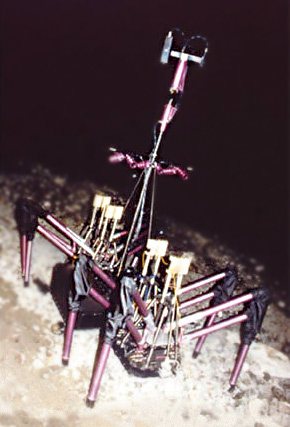
Carnegie Mellon University Field Robotics Center · legged machine
Dante
An eight-legged frame walker that rappelled down steep slopes on a tensioned tether. It was the predecessor of Dante II.
- Price
- —Not published
- Height
- —Not published
- Weight
- —Not published
- Payload
- —Not published
- Speed
- —Not published
- Battery
- —Not published
Not sure this is the one? Find the best robot for your job Starts with: research and teaching. Five more quick questions.
Why it matters
An early attempt to send an autonomous walking robot into an active volcano (Mount Erebus, Antarctica).
Real-world use
Descended into Mount Erebus crater in 1992 until its communications tether failed and the mission ended early.
Maker
Carnegie Mellon University Field Robotics CenterUniversity lab · Pittsburgh, Pennsylvania, USAPublic attention
A historic robot: no longer sold or in use, so it is not ranked against current machines.
- No Wikipedia article of its own yet
- No recent press stories listed yet
Measures how much people read and write about a robot, not how good it is. Measured 2026-10-13; same method for every robot. How it is measured
What’s inside
The parts the company has talked about publicly.
- Movement
- Walks on legs
- How it runs
- Supervised. Operators at a base station linked by a fibre tether monitored and commanded it while its onboard software sequenced the legs and chose safe footholds.
- Actuators & motors
- Eight pantographic legs in two frames of four (inner and outer) walking as a framewalker; each leg could adjust its height. Tensioned tether used to rappel on steep slopes.
- Sensors & vision
- Scanning laser rangefinder and trinocular camera system; science instruments for gas composition, radioactivity and magma temperature.
- Compute
- Some computers off-board at a base station, linked by fibre-optic cable; on-board planning chose safe paths.
- Other details
- Built in about 10 months for an expedition into Mount Erebus, Antarctica.
Lineage
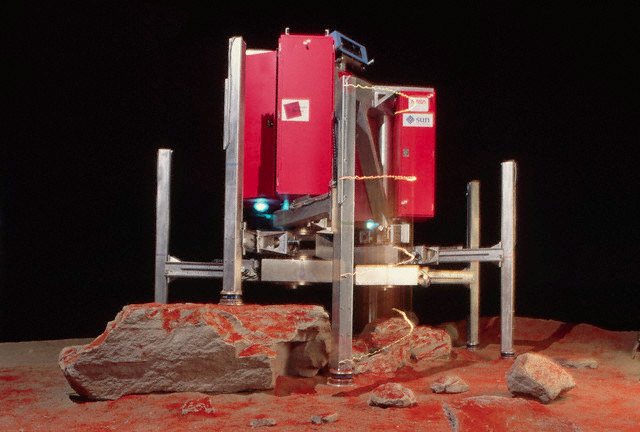
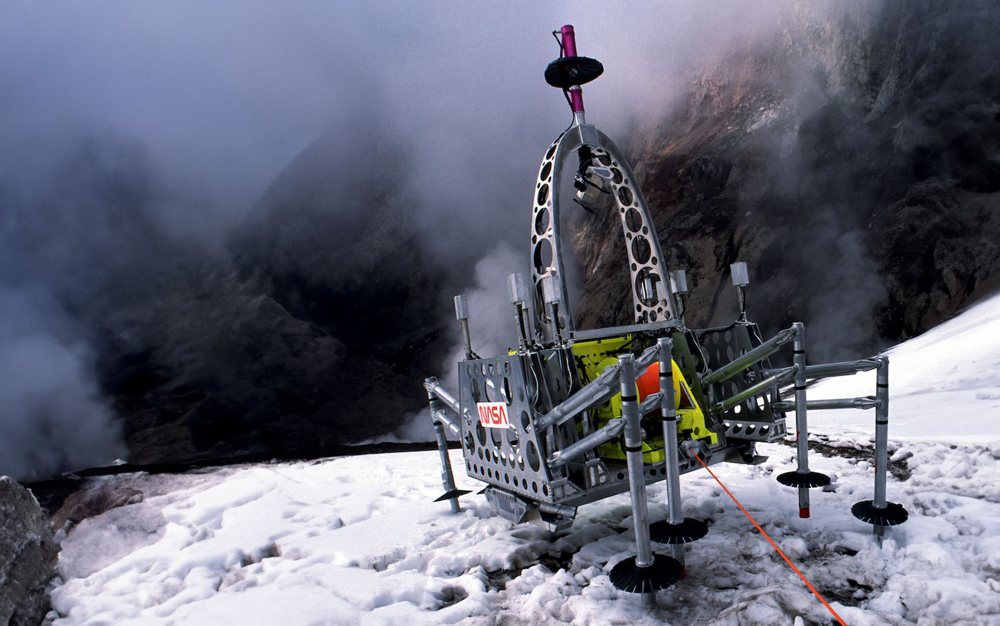
Every Carnegie Mellon University Field Robotics Center (for NASA) machine in order.
Made, sold and where
Unit counts are usually company figures; analysts often disagree.
- Price
- Not published
- How to get one
- No official buying page found
- Built
- One robot
- Sold or delivered
- not sold
- Where it is sold or used
- Carnegie Mellon University Field Robotics Center, Pittsburgh
- Customers and pilots
- NASA-sponsored volcano exploration
Sources
Figures come from press coverage. Every link below backs something on this page.
Photos and logos only identify each robot and its maker. Simbeing is not affiliated with, sponsored by or endorsing any company, and nothing here is advertising. Figures are for statistics only and are not advice of any kind. Terms of use