Istituto Italiano di Tecnologia (IIT) · robot dog
HyQ
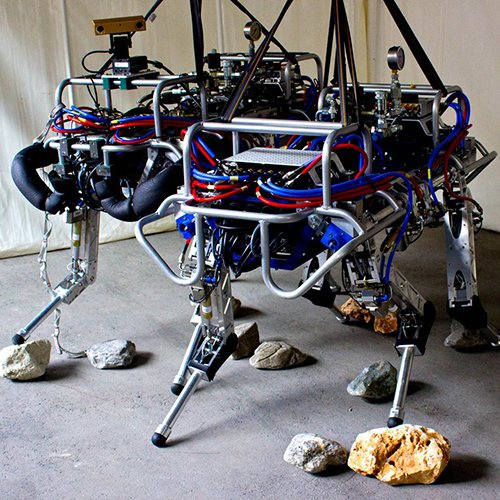
A tethered hydraulic quadruped ('HyQ' means hydraulic quadruped) that could trot, jump more than 20 cm and kick. IIT papers describe it as an 80 kg robot.
- Price
- —research robot; development cost about $1.2 million
- Height
- 100 cmTaller than 100%
- Weight
- 80 kgHeavier than 93%
- Payload
- —Not published
- Speed
- 7.2 km/hFaster than 29%
- Battery
- —Not published
Not sure this is the one? Find the best robot for your job Starts with: research and teaching. Five more quick questions.
Why it matters
One of the first versatile hydraulic research quadruped platforms outside the US.
Real-world use
None (research)
Timeline
- First shown
- 2011
- Released
- Not yet
Maker
Istituto Italiano di Tecnologia (IIT)Government lab · founded 2003 · Genoa, ItalyAbout EUR 90 million a year from the Italian government; RobotCub received EUR 8.5 million from the European Commission
How it stacks up
Against other robot dogs that publish the figure. Pick a measure.
HyQ is taller than 100% of the 22 other robot dogs that publish a height. Bars show the 7 closest in date.
HyQ is heavier than 93% of the 41 other robot dogs that publish a weight. Bars show the 7 closest in date.
HyQ is faster than 29% of the 34 other robot dogs that publish a speed. Bars show the 7 closest in date.
HyQ has more joints than 0% of the 23 other robot dogs that publish a joints. Bars show the 7 closest in date.
Not published by the maker: payload, battery, price.
Public attention
A historic robot: no longer sold or in use, so it is not ranked against current machines.
- No Wikipedia article of its own yet
- 3 news stories from reputable press listed on this page
Measures how much people read and write about a robot, not how good it is. Measured 2026-10-13; same method for every robot. How it is measured
What’s inside
The parts the company has talked about publicly.
- Movement
- Walks on legs · 12 joints
- How it runs
- Assisted. Researchers commanded its speed and direction while its controllers kept it balanced while trotting and jumping.
- Actuators & motors
- Eight hydraulic cylinders with high-performance servovalves plus four brushless DC motors with harmonic drives; torque-controlled, actively compliant legs (12 DoF).
- Sensors & vision
- Stereo cameras, laser range finder, IMU (Microstrain, 1 kHz), joint force-torque sensors and high-resolution encoders.
- Compute
- PC/104 embedded computer with data-acquisition boards.
- Battery & power
- Tethered hydraulic and electrical power in the reported tests.
- Materials & build
- Aerospace-grade aluminium alloy and stainless steel.
- AI & software
- Xenomai real-time Linux with the SL simulation and control package; reactive balance and stepping.
- Other details
- About 70 kg, 1 m long; trotted at up to 2 m/s outdoors in 2012 and jumps over 20 cm. Successor HyQReal (2019) pulled a 3-tonne aircraft.
Lineage
Every Istituto Italiano di Tecnologia (IIT) machine in order.
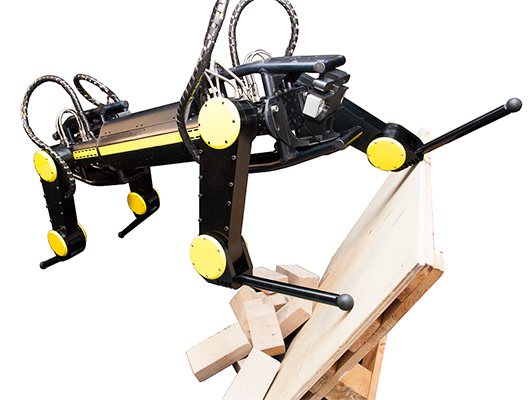
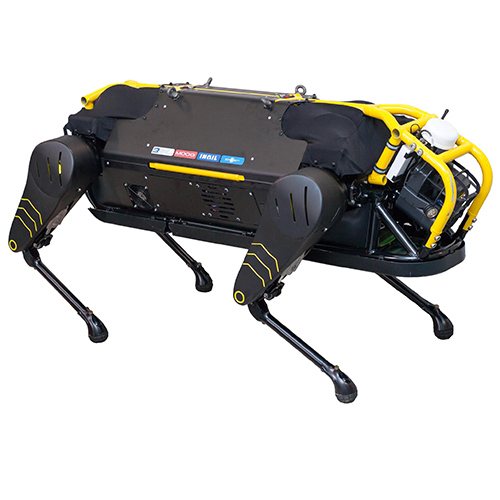
Istituto Italiano di Tecnologia (IIT) also makes 8 humanoids. See every Istituto Italiano di Tecnologia (IIT) robot
Watch HyQ
Made, sold and where
Unit counts are usually company figures; analysts often disagree.
- Price
- Not publishedresearch robot; development cost about $1.2 million
- How to get one
- No official buying page found
- Built
- Research robot (HyQ2Max and HyQReal followed)
- Sold or delivered
- not sold; development cost about $1.2 million
- Where it is sold or used
- Istituto Italiano di Tecnologia, Genoa, Italy
- Customers and pilots
- None (research)
News
The latest 3, newest first. Summaries are ours; tap through for the original.
- HyQ returns with new tricks
IEEE Spectrum showed HyQ's latest locomotion skills from IIT's Dynamic Legged Systems lab.
IEEE Spectrum - HyQ learns to avoid stumbles
IEEE Spectrum reported a step-reflex that lets HyQ recover from trips, and its visit to London.
IEEE Spectrum - HyQ's first outdoor run
IIT took HyQ outside for the first time, reaching 2 m/s on a concrete track using IMU-based balance control.
IEEE Spectrum
Side by side with its peers
Picked by the same rules for every robot: another maker’s robot that moves the same way, is at the same stage and does at least one of the same main jobs, first shown within two years. Closer size and price rank higher. How we choose
| Measure | HyQIstituto Italiano di Tecnologia (IIT) | No public photo yetWe only show photos we're allowed to useStarlETHETH Zurich Autonomous Systems LabSame job: research · Both walk · Both past robots | 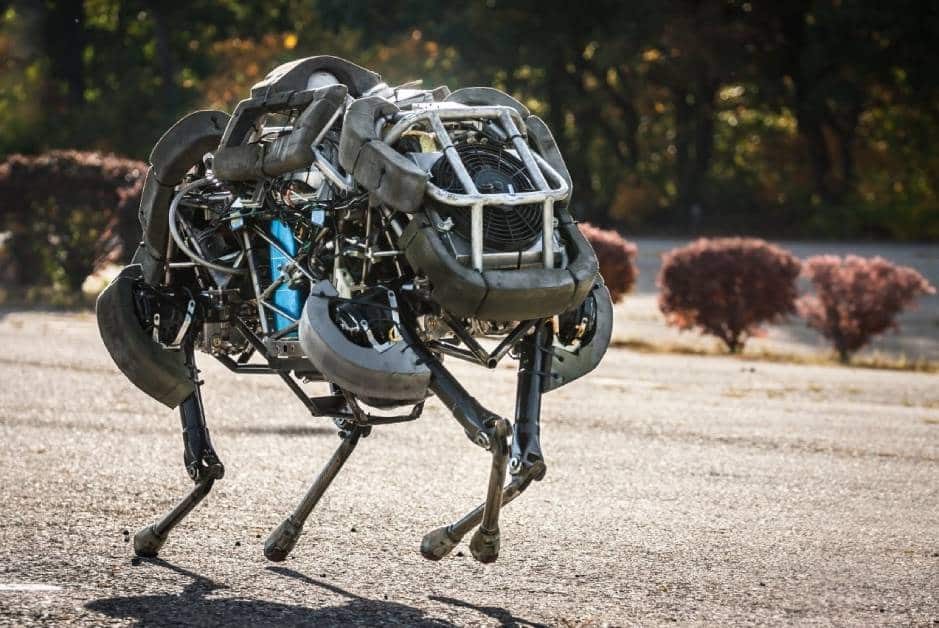 WildCatBoston DynamicsSame job: research · Both walk · Both past robots WildCatBoston DynamicsSame job: research · Both walk · Both past robots | 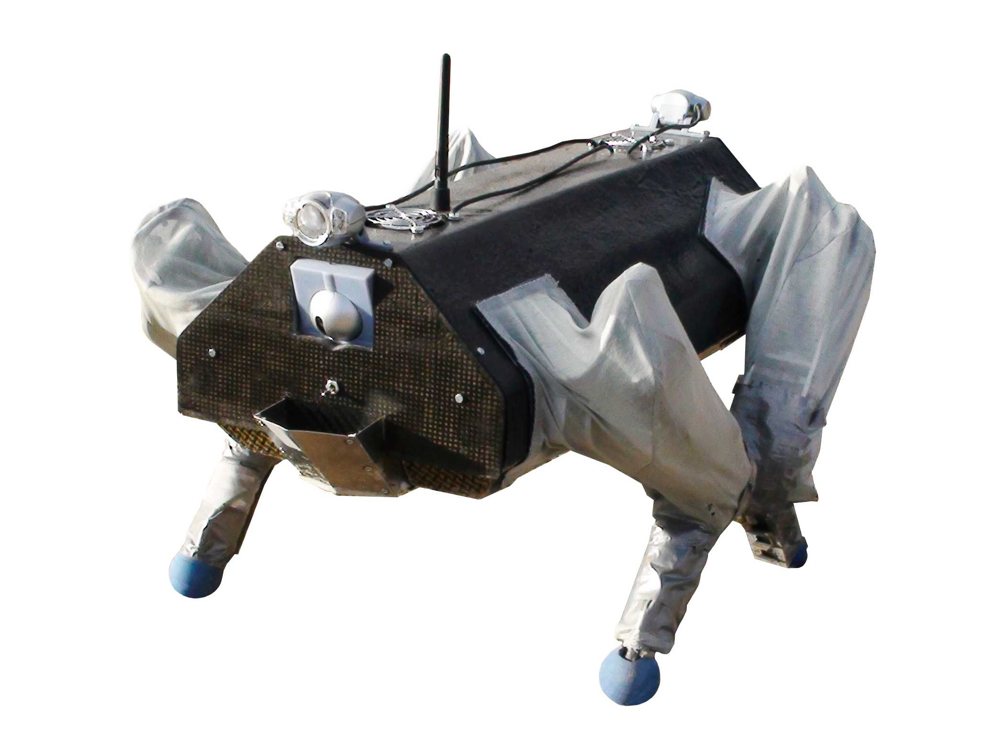 ALoFETH ZurichSame job: research · Both walk · Both past robots ALoFETH ZurichSame job: research · Both walk · Both past robots |
|---|---|---|---|---|
| First shown | 2011 | 2012 | 2013-10-03 | 2009 |
| Status | Retired | Retired | Retired | Retired |
| Height | 100 cm | — | — | — |
| Weight | 80 kg | — | — | — |
| Joints | 12 | — | — | — |
| Speed | 7.2 km/h | — | 25.7 km/h | — |
| Payload | — | — | — | — |
| Battery | — | — | — | — |
| Price | — | — | — | — |
Sources
Figures come from press coverage. Every link below backs something on this page.
Photos and logos only identify each robot and its maker. Simbeing is not affiliated with, sponsored by or endorsing any company, and nothing here is advertising. Figures are for statistics only and are not advice of any kind. Terms of use