Waseda University / JST Moonshot program · research humanoid
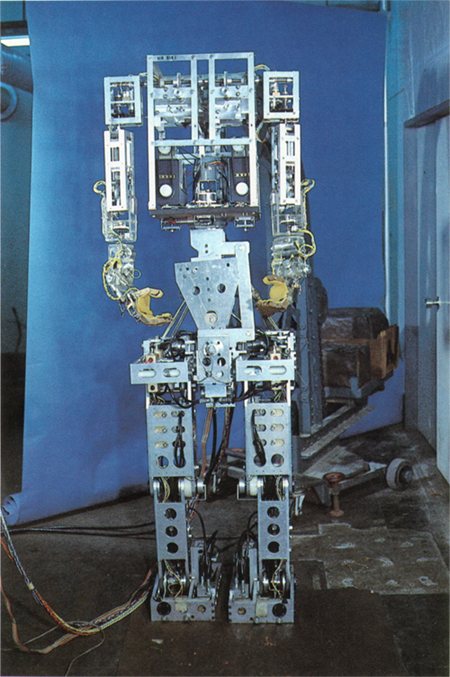
WABOT-1
Built from 1970 to 1973 by combining Waseda's WL-5 walking legs and WAM-4 arms with vision and hearing, so it could judge distances and talk in simple Japanese. It is displayed in Building 63 on Waseda's Nishi-Waseda campus.
- Price
- —Not published
- Height
- —Not published
- Weight
- —Not published
- Payload
- —Not published
- Speed
- —Not published
- Battery
- —Not published
Not sure this is the one? Find the best robot for your job Starts with: research and teaching. Five more quick questions.
Why it matters
Widely described as the world's first full-scale humanoid robot: it walked on two legs, gripped objects and spoke simple Japanese.
Real-world use
Displayed in Building 63, Nishi-Waseda campus, Waseda University
Maker
Waseda University / JST Moonshot programUniversity lab · founded 1882 · Tokyo, JapanGovernment research funding through the JST Moonshot programme (amount not stated).
Public attention
A historic robot: no longer sold or in use, so it is not ranked against current humanoids.
- No Wikipedia article of its own yet
- 1 news story from reputable press listed on this page
Measures how much people read and write about a robot, not how good it is. Measured 2026-10-13; same method for every robot. How it is measured
What’s inside
The parts the company has talked about publicly.
- Movement
- Walks on legs
- Actuators & motors
- Leg system was Waseda's WL-5 biped and arm system its WAM-4 arms; the lab booklet does not state the drive type.
- Hands
- WAM-4 artificial hands with tactile sensors for gripping and carrying objects.
- Sensors & vision
- Artificial eyes and external receptors to judge distance and direction to objects; artificial ears for hearing.
- AI & software
- Separate limb-control, vision and conversation systems; it could converse in simple Japanese through an artificial mouth. Waseda likened its mental ability to a child of about 18 months.
Lineage
Every Waseda University (Ichiro Kato lab) humanoid in order.
- WABOT-11973Retired
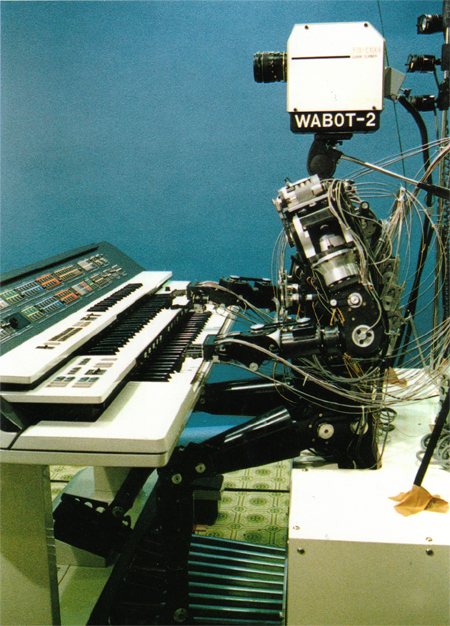 WABOT-21984Retired
- No public photo yetWe only show photos we're allowed to useHadaly-21997Retired
- No public photo yetWe only show photos we're allowed to useWABIAN1997Retired
- No public photo yetWe only show photos we're allowed to useWE-4RII2004Retired
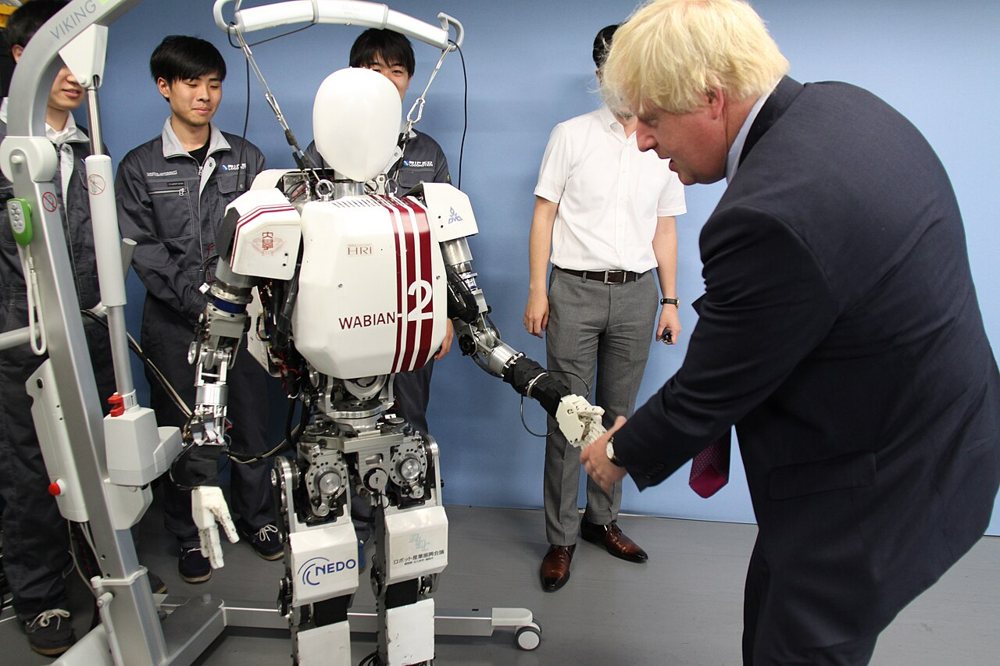 WABIAN-22006Retired
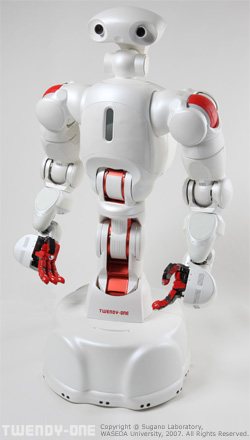 TWENDY-ONE2007Research
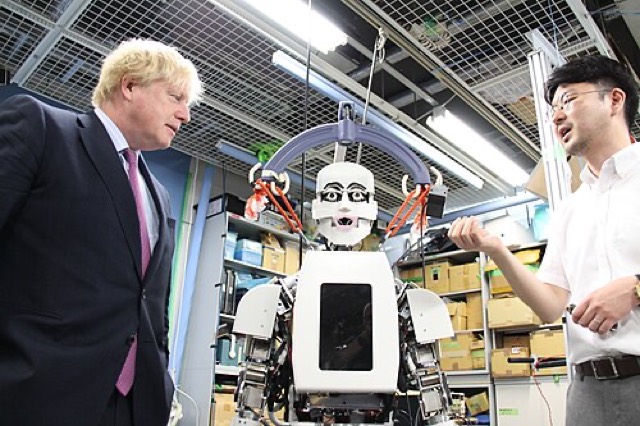 KOBIAN2009Research
- No public photo yetWe only show photos we're allowed to useWaseda Flutist Robot WF-4RVI2011Retired
- No public photo yetWe only show photos we're allowed to useAIREC (Dry-AIREC)2025Research
Watch WABOT-1
Made, sold and where
Unit counts are usually company figures; analysts often disagree.
- Price
- Not published
- How to get one
- No official buying page found
- Built
- 1 (research prototype)
- Sold or delivered
- never sold
- Where it is sold or used
- Japan
- Customers and pilots
- Displayed in Building 63, Nishi-Waseda campus, Waseda University
News
The latest 1, newest first. Summaries are ours; tap through for the original.
- WABOT-1 completed
Prof. Ichiro Kato's group finished WABOT-1 after a project begun in 1970, combining walking legs, arms, vision and speech.
Waseda University Humanoid Robotics Institute
Sources
Figures come from the maker. Every link below backs something on this page.
Photos and logos only identify each robot and its maker. Simbeing is not affiliated with, sponsored by or endorsing any company, and nothing here is advertising. Figures are for statistics only and are not advice of any kind. Terms of use