Waseda University / JST Moonshot program · research humanoid
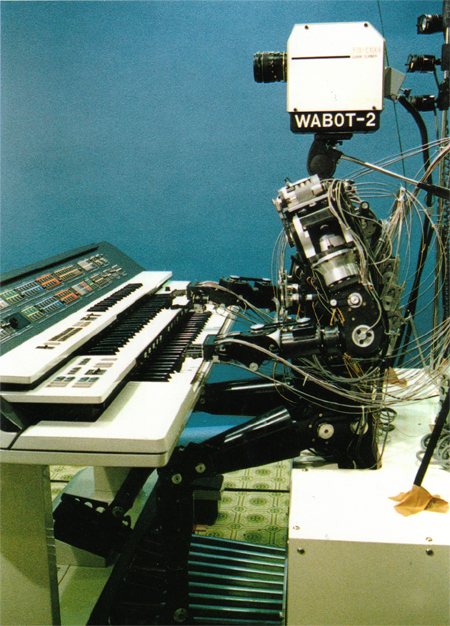
WABOT-2
A seated musician robot that read ordinary scores with a camera, played an electronic organ with its fingers and feet, and could follow a human singer. Contemporary TV coverage credited it with 50 degrees of movement run by 80 microprocessors.
- Price
- —Not published
- Height
- —Not published
- Weight
- —Not published
- Payload
- —Not published
- Speed
- —Not published
- Battery
- —Not published
Not sure this is the one? Find the best robot for your job Starts with: research and teaching. Five more quick questions.
Why it matters
First robot built to read sheet music and play a keyboard instrument with both hands and feet; Waseda calls it the first milestone towards a 'personal robot'.
Real-world use
Performed at Expo '85 in Tsukuba; in 2026 it was on loan to the National Communication Museum in Melbourne, Australia.
Maker
Waseda University / JST Moonshot programUniversity lab · founded 1882 · Tokyo, JapanGovernment research funding through the JST Moonshot programme (amount not stated).
How it stacks up
Against other humanoids that publish the figure. Pick a measure.
WABOT-2 has more joints than 84% of the 236 other humanoids that publish a joints. Bars show the 7 closest in date.
Not published by the maker: height, weight, speed, payload, battery, price.
Public attention
A historic robot: no longer sold or in use, so it is not ranked against current humanoids.
- No Wikipedia article of its own yet
- 2 news stories from reputable press listed on this page
Measures how much people read and write about a robot, not how good it is. Measured 2026-10-13; same method for every robot. How it is measured
What’s inside
The parts the company has talked about publicly.
- Movement
- Stationary · 50 joints
- Actuators & motors
- DC motors with harmonic drives.
- Hands
- Five-fingered hands with 14 DoF each.
- Sensors & vision
- CCD camera to read ordinary sheet music; potentiometers, DC tachogenerators and rotary encoders on joints; it listened to a human singer to follow them.
- Compute
- Distributed Zilog processors: one 16-bit Z8001 for high-level limb control, two Z8002s for mid-level playing control and 50 8-bit Z8094s, one per joint, for motor control.
- Battery & power
- No battery; powered from an external supply.
- Materials & build
- Carbon-fibre-reinforced plastic structure; about 90 kg.
- AI & software
- Unix OS with control code in C and assembly.
- Other details
- 50 DoF in total (hands 14x2, arms 7x2, legs 4x2); played an electronic organ with fingers and feet.
Named suppliers:Harmonic Drive
Lineage
Every Waseda University (Ichiro Kato lab) humanoid in order.
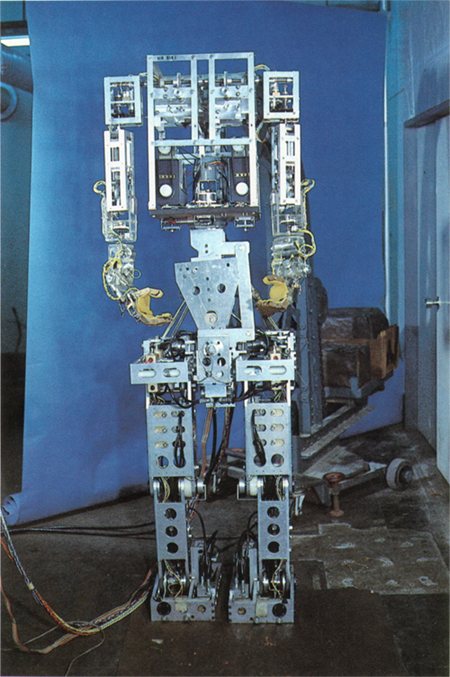 WABOT-11973Retired
- WABOT-21984Retired
- No public photo yetWe only show photos we're allowed to useHadaly-21997Retired
- No public photo yetWe only show photos we're allowed to useWABIAN1997Retired
- No public photo yetWe only show photos we're allowed to useWE-4RII2004Retired
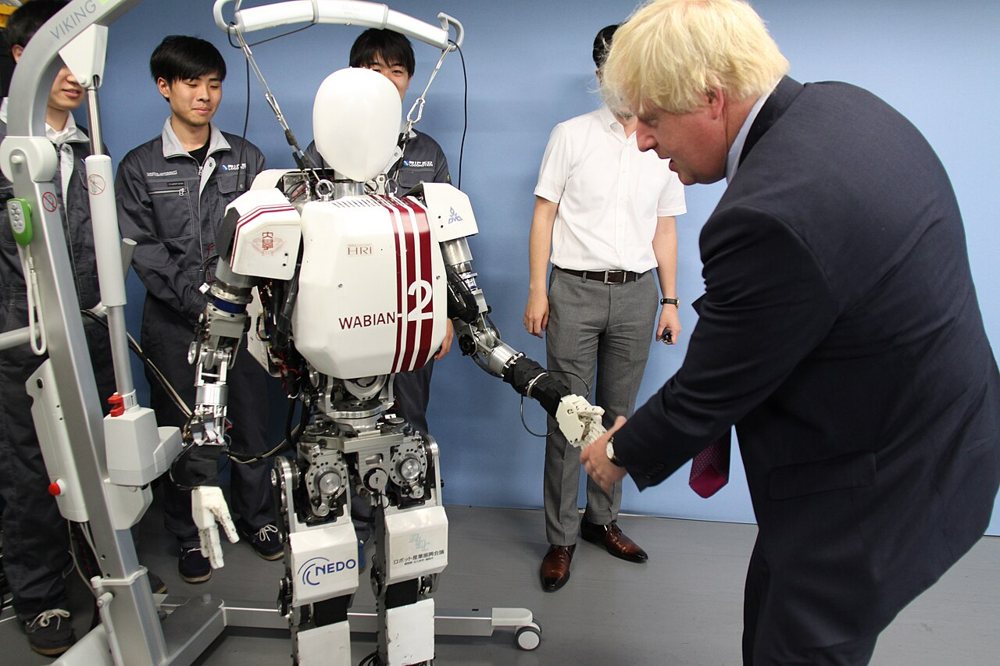 WABIAN-22006Retired
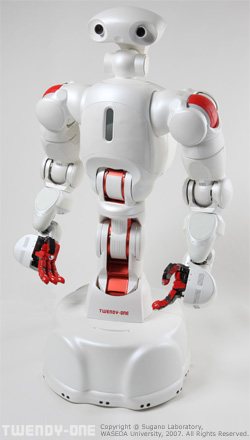 TWENDY-ONE2007Research
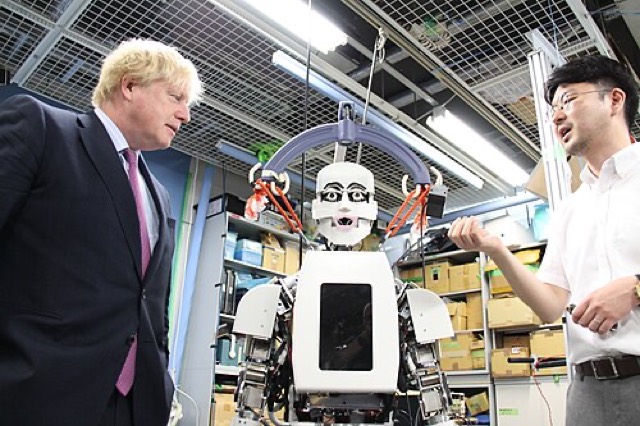 KOBIAN2009Research
- No public photo yetWe only show photos we're allowed to useWaseda Flutist Robot WF-4RVI2011Retired
- No public photo yetWe only show photos we're allowed to useAIREC (Dry-AIREC)2025Research
Watch WABOT-2
Made, sold and where
Unit counts are usually company figures; analysts often disagree.
- Price
- Not published
- How to get one
- No official buying page found
- Built
- 1 (research prototype)
- Sold or delivered
- never sold
- Where it is sold or used
- Japan; on loan to Australia's National Communication Museum, Melbourne
- Customers and pilots
- Shown at Expo '85, Tsukuba; on loan to the National Communication Museum, Melbourne (return expected mid-late 2026, per Waseda)
News
The latest 2, newest first. Summaries are ours; tap through for the original.
- WABOT-2 performs at Expo '85 in Tsukuba
The keyboard-playing robot was exhibited at the Tsukuba science expo.
Waseda University - WABOT-2 completed
Kato's lab finished a 'specialist' robot that read scores and played an electronic organ.
Waseda University Humanoid Robotics Institute
Sources
Figures come from press coverage. Every link below backs something on this page.
Photos and logos only identify each robot and its maker. Simbeing is not affiliated with, sponsored by or endorsing any company, and nothing here is advertising. Figures are for statistics only and are not advice of any kind. Terms of use