NASA Jet Propulsion Laboratory · legged machine
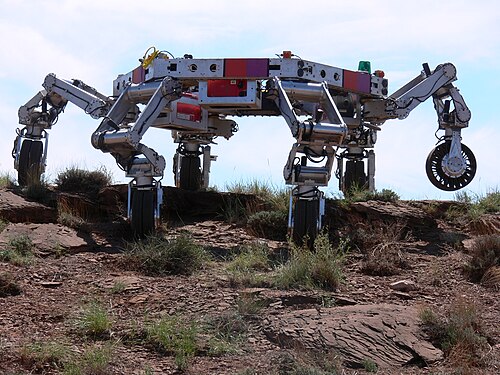
ATHLETE
All-Terrain Hex-Limbed Extra-Terrestrial Explorer
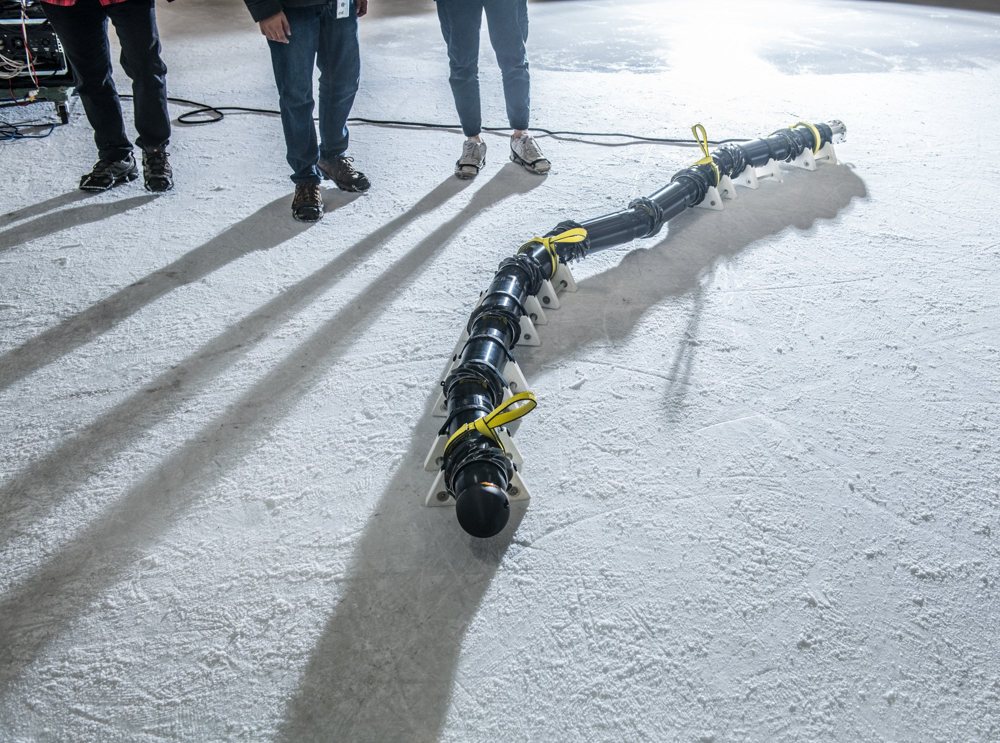
A lunar-cargo testbed with six 6-DOF limbs, each ending in a powered wheel, built under NASA's Human-Robot Systems project. It is 2.75 m wide.
- Price
- —Not published
- Height
- 200 cmTaller than 64%
- Weight
- 850 kgHeavier than 76%
- Payload
- 300 kgCarries more than 67%
- Speed
- —Not published
- Battery
- —Not published
Not sure this is the one? Find the best robot for your job Starts with: research and teaching. Five more quick questions.
Why it matters
A six-limbed 'wheel-on-leg' rover that drives on wheels but can lock them and walk out of soft or steep ground.
Real-world use
Two identical first-generation prototypes were built in 2005; JPL says one remains operational.
Maker
NASA Jet Propulsion LaboratoryGovernment lab · Pasadena, California, USANASA; DARPA (RoboSimian)
How it stacks up
Against other legged & novel that publish the figure. Pick a measure.
ATHLETE (All-Terrain Hex-Limbed Extra-Terrestrial Explorer) is taller than 64% of the 22 other legged & novel that publish a height. Bars show the 7 closest in date.
ATHLETE (All-Terrain Hex-Limbed Extra-Terrestrial Explorer) is heavier than 76% of the 25 other legged & novel that publish a weight. Bars show the 7 closest in date.
ATHLETE (All-Terrain Hex-Limbed Extra-Terrestrial Explorer) carries more than 67% of the 9 other legged & novel that publish a payload. Bars show the 7 closest in date.
ATHLETE (All-Terrain Hex-Limbed Extra-Terrestrial Explorer) has more joints than 100% of the 16 other legged & novel that publish a joints. Bars show the 7 closest in date.
Not published by the maker: speed, battery, price.
Public attention
How much public attention ATHLETE (All-Terrain Hex-Limbed Extra-Terrestrial Explorer) gets, from open data.
- 510 views of its Wikipedia article in the last 90 days (ATHLETE)
- No recent press stories listed yet
Measures how much people read and write about a robot, not how good it is. Measured 2026-10-13; same method for every robot. How it is measured
What’s inside
The parts the company has talked about publicly.
- Movement
- Wheel-legs · 42 joints
- How it runs
- Supervised. Operators directed it from a workstation or handheld controller while onboard software coordinated its wheel and limb motions.
- Actuators & motors
- Six 6-DoF limbs, each ending in a 1-DoF powered wheel; wheels lock to act as feet for walking.
- Hands
- Quick-disconnect tool adapters on the limbs; tools drawn from a 'tool belt' and driven by the wheel motor (drilling, gripping).
- Other details
- First-generation prototype about 2.75 m wide, just over 2 m tall, about 850 kg, 300 kg payload in Earth gravity. Designed for lunar cargo handling.
Lineage
Every NASA Jet Propulsion Laboratory machine in order.
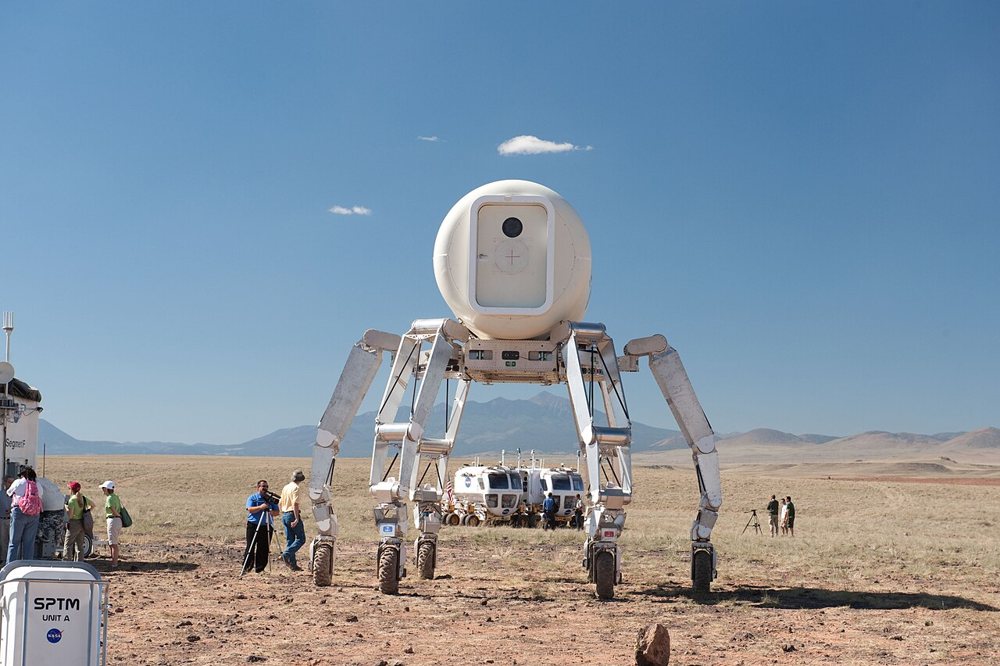
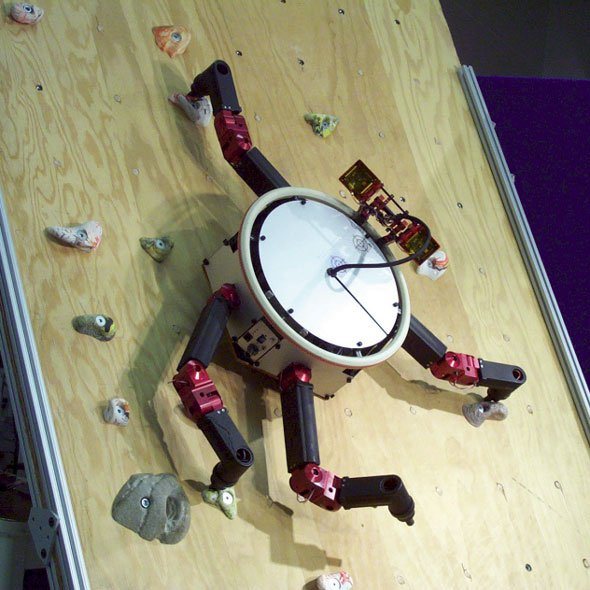
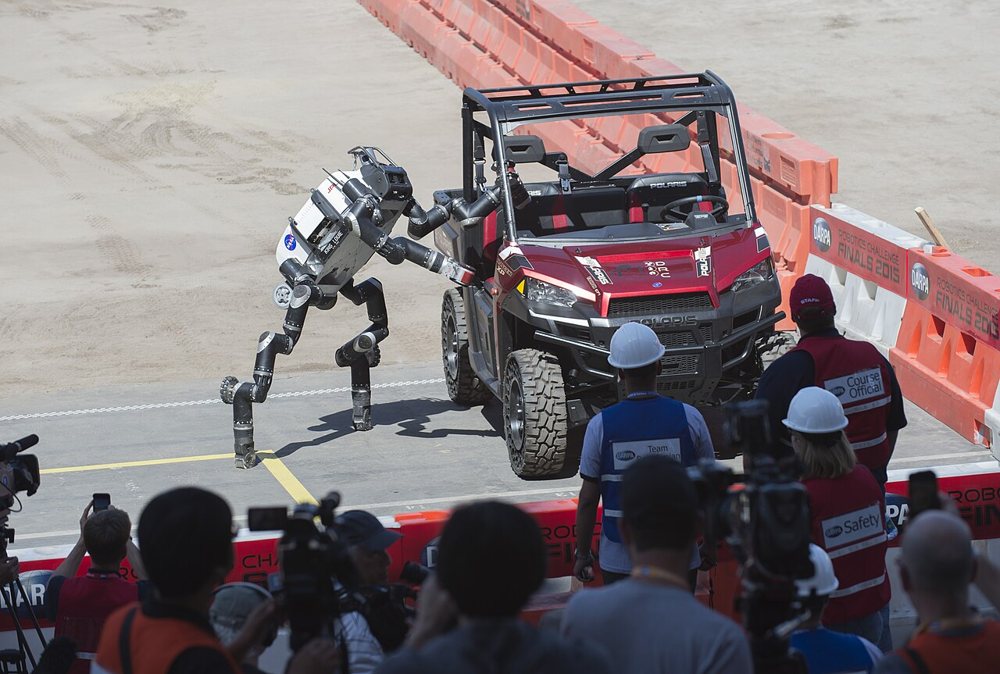
Made, sold and where
Unit counts are usually company figures; analysts often disagree.
- Price
- Not published
- How to get one
- No official buying page found
- Built
- Two identical first-generation prototypes in 2005; one still operational (JPL)
- Sold or delivered
- not sold
- Where it is sold or used
- NASA Jet Propulsion Laboratory, Pasadena, California
- Customers and pilots
- NASA research with Johnson and Ames centres, Stanford and Boeing
Sources
Figures come from the maker. Every link below backs something on this page.
Photos and logos only identify each robot and its maker. Simbeing is not affiliated with, sponsored by or endorsing any company, and nothing here is advertising. Figures are for statistics only and are not advice of any kind. Terms of use