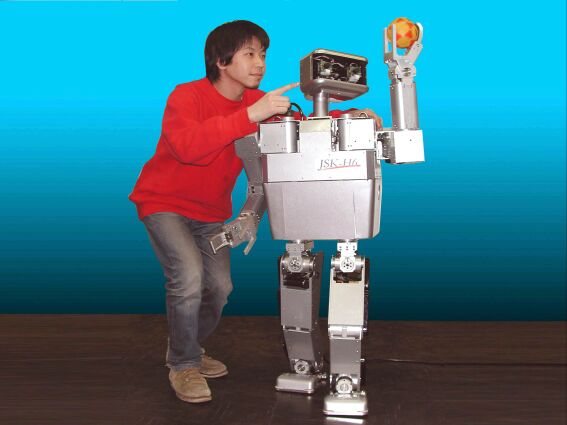
JSK Laboratory, University of Tokyo · research humanoid
H6
A research humanoid that Kawada built on commission from the University of Tokyo; the job led Kawada into the robotics business and on to the HRP series.
- Price
- —Not published
- Height
- —Not published
- Weight
- —Not published
- Payload
- —Not published
- Speed
- —Not published
- Battery
- —Not published
Not sure this is the one? Find the best robot for your job Starts with: research and teaching. Five more quick questions.
Why it matters
A retired humanoid from University of Tokyo JSK Lab, built by Kawada Industries.
Real-world use
University of Tokyo JSK lab
Timeline
- First shown
- 2000-06
- Released
- Not yet
Public attention
A historic robot: no longer sold or in use, so it is not ranked against current humanoids.
- No Wikipedia article of its own yet
- 3 news stories from reputable press listed on this page
Measures how much people read and write about a robot, not how good it is. Measured 2026-10-13; same method for every robot. How it is measured
What’s inside
The parts the company has talked about publicly.
- Movement
- Walks on legs
- Actuators & motors
- DC motors with Harmonic Drive gearing on all major joints; 35 DoF in total (6 per leg, 1 toe joint per foot, 7 per arm, 1 per gripper, 2 neck, 3 eyes), per the JSK lab page.
- Hands
- Simple one-DoF gripper on each arm.
- Sensors & vision
- Active stereo-style vision head with 3 DoF for the eyes, used for on-board 3D vision (depth flow, plane finding, 3D model matching); the lab page does not name the camera or force-sensor hardware.
- Compute
- On-board PC with dual Pentium III 750 MHz processors; wireless Ethernet link.
- Battery & power
- On-board batteries weighing 4 kg (included in the 55 kg total); capacity and runtime not published. Described as fully self-contained.
- Materials & build
- 137 cm tall, 59 cm wide, 55 kg; frame materials not stated.
- AI & software
- RT-Linux real-time OS; real-time servo and balance control, online dynamic walking-pattern generation, 3D vision, motion planning and graphical simulation (the lab's work led to the Z-DYNAFORM dynamics library).
- Other details
- Built by Kawada Industries on commission for the University of Tokyo's Inoue-Inaba (JSK) lab; Kawada says the job started its robotics business.
Named suppliers:IntelHarmonic Drive
Lineage
Every University of Tokyo JSK Lab, built by Kawada Industries humanoid in order.
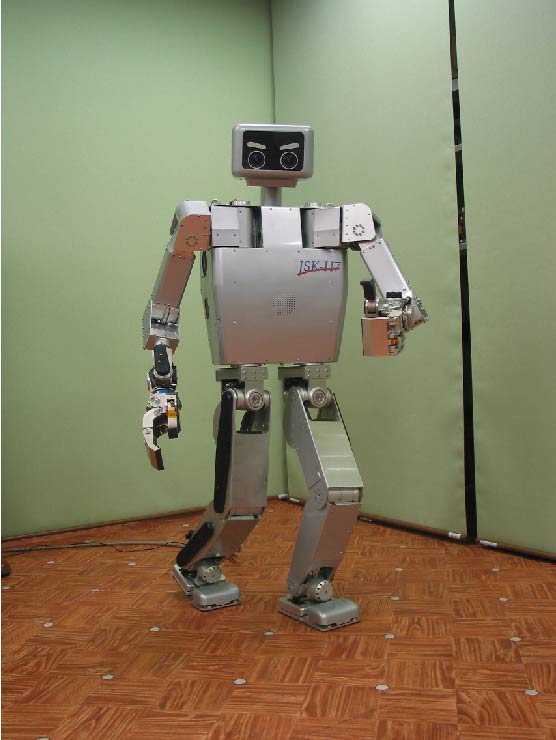
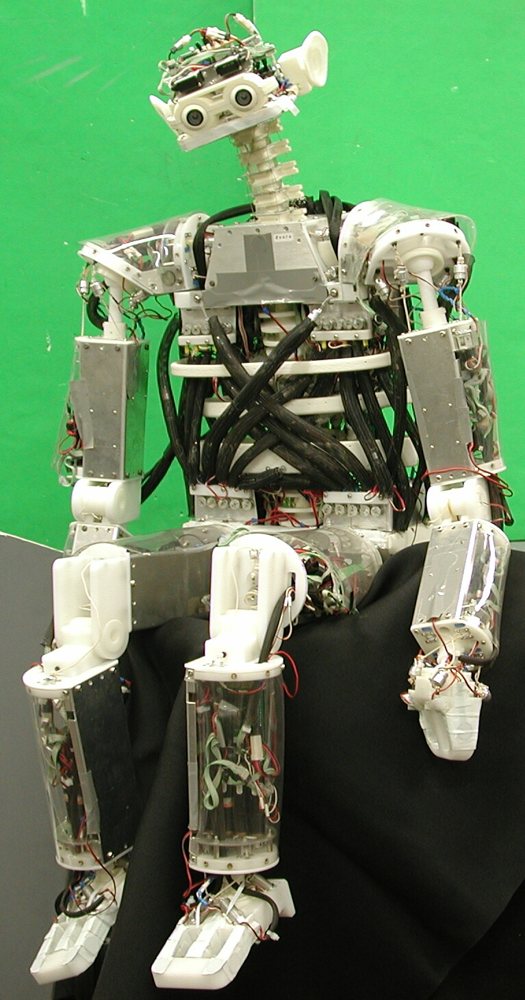
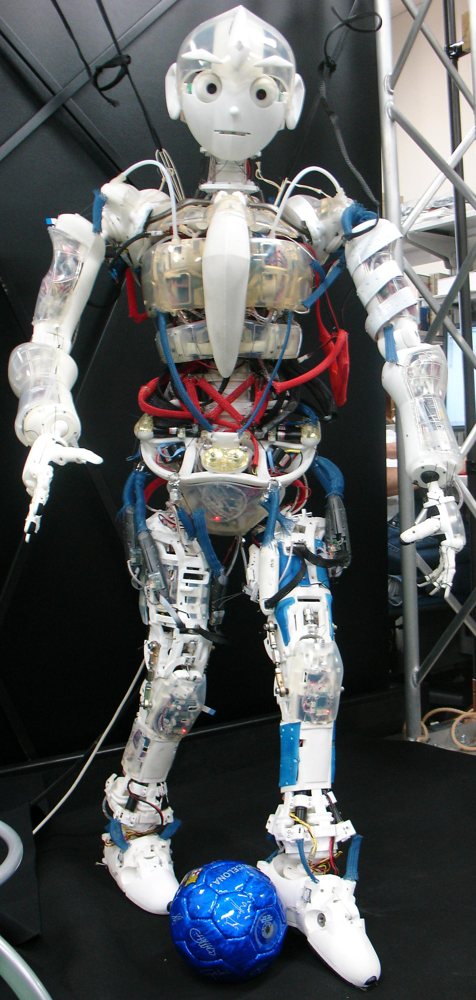
Made, sold and where
Unit counts are usually company figures; analysts often disagree.
- Price
- Not published
- How to get one
- No official buying page found
- Built
- Prototype completed June 2000 (lab figure); unit count not stated
- Sold or delivered
- Not sold; research robot
- Where it is sold or used
- Kawada Industries, Japan (contract build)
- Customers and pilots
- University of Tokyo JSK lab
News
The latest 3, newest first. Summaries are ours; tap through for the original.
- Kawada's work leads on to HRP-2 Promet
Kawada announced HRP-2 Promet as the final product of a METI humanoid project and began offering it to research institutes.
Kawada Robotics - H6 design presented at IROS 2000
Nishiwaki, Sugihara, Kagami, Kanehiro, Inaba and Inoue described H6 as a platform for integrating perception and action.
Crossref (IEEE IROS 2000 record) - Kawada builds H6 under contract
Kawada Industries built H6 on commission from the University of Tokyo, which it cites as the start of its robot business.
Kawada Robotics
Side by side with its peers
Picked by the same rules for every humanoid: another maker’s robot that moves the same way, is at the same stage and does at least one of the same main jobs, first shown within two years. Closer size and price rank higher. How we choose
| Measure | H6University of Tokyo JSK Lab, built by Kawada Industries | No public photo yetWe only show photos we're allowed to useXianxingzhe (Pioneer)National University of Defense Technology (NUDT)Same job: research · Both walk · Both past robots | 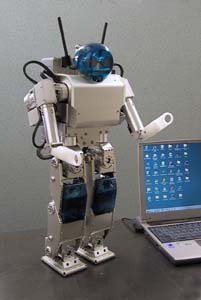 HOAP-1Fujitsu Automation / Fujitsu LaboratoriesSame job: research · Both walk · Both past robots HOAP-1Fujitsu Automation / Fujitsu LaboratoriesSame job: research · Both walk · Both past robots | 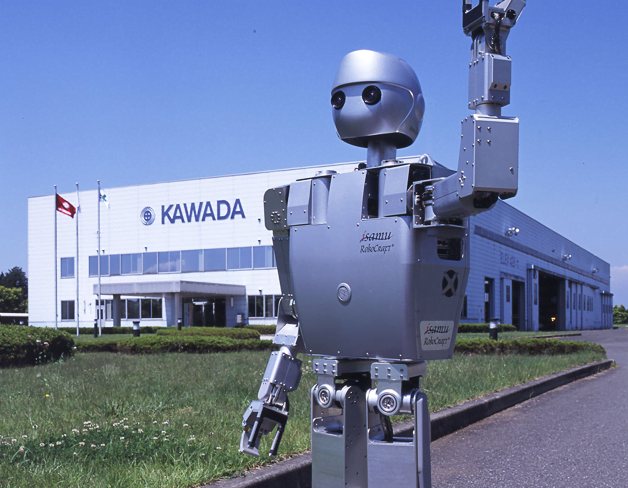 isamuKawada IndustriesSame job: research · Both walk · Both past robots isamuKawada IndustriesSame job: research · Both walk · Both past robots |
|---|---|---|---|---|
| First shown | 2000-06 | 2000-11-29 | 2001-09-10 | 2001 |
| Status | Retired | Retired | Discontinued | Retired |
| Height | — | 140 cm | 48 cm | — |
| Weight | — | 20 kg | 6 kg | — |
| Joints | — | — | 20 | — |
| Speed | — | — | — | — |
| Payload | — | — | — | — |
| Battery | — | — | — | — |
| Price | — | — | $41,000 | — |
Sources
Figures come from the maker. Every link below backs something on this page.
Photos and logos only identify each robot and its maker. Simbeing is not affiliated with, sponsored by or endorsing any company, and nothing here is advertising. Figures are for statistics only and are not advice of any kind. Terms of use