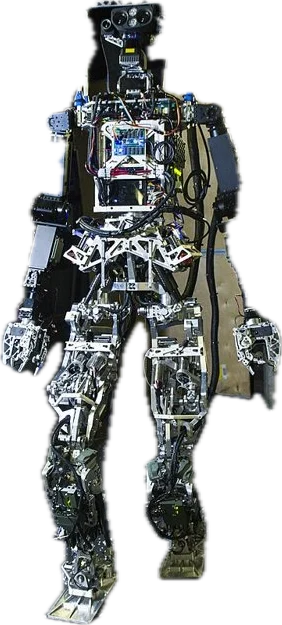
Virginia Tech TREC Lab · research humanoid
THOR / SAFFiR
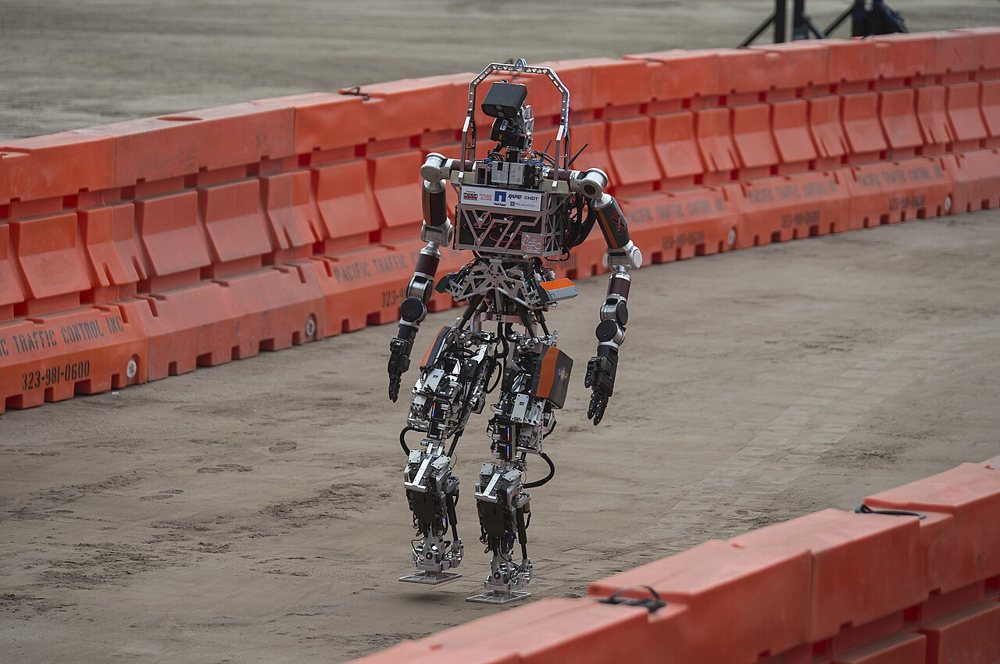
A 5 ft 10 in, 140 lb electric humanoid (originally named THOR) built for the Navy's Shipboard Autonomous Firefighting Robot program; it walked on uneven decks, used thermal imaging to spot hot equipment and aimed a hose.
- Price
- —Not published
- Height
- 178 cmTaller than 84%
- Weight
- 64 kgHeavier than 54%
- Payload
- —Not published
- Speed
- —Not published
- Battery
- —Not published
Not sure this is the one? Find the best robot for your job Starts with: research and teaching. Five more quick questions.
Why it matters
Shown putting out a small fire aboard the decommissioned USS Shadwell, an early test of a humanoid firefighting robot on a ship.
Real-world use
Tested aboard USS Shadwell in November 2014.
Timeline
- Released
- Not yet
Maker
Virginia Tech TREC LabUniversity lab · Blacksburg, United StatesUS Office of Naval Research (SAFFiR); DARPA Robotics Challenge (Team VALOR)
How it stacks up
Against other humanoids that publish the figure. Pick a measure.
THOR / SAFFiR is taller than 84% of the 305 other humanoids that publish a height. Bars show the 7 closest in date.
THOR / SAFFiR is heavier than 54% of the 277 other humanoids that publish a weight. Bars show the 7 closest in date.
Not published by the maker: speed, payload, joints, battery, price.
Public attention
A historic robot: no longer sold or in use, so it is not ranked against current humanoids.
- No Wikipedia article of its own yet
- 2 news stories from reputable press listed on this page
Measures how much people read and write about a robot, not how good it is. Measured 2026-10-13; same method for every robot. How it is measured
What’s inside
The parts the company has talked about publicly.
- Hands
- simple
- Movement
- Walks on legs
- Actuators & motors
- Custom linear series elastic actuators: ball-screw drives with a configurable titanium leaf spring (372 or 655 kN/m), an in-line load cell and up to 2,225 N peak force; at the hip and knee pitch joints an inverted Hoeken's linkage gives about 115 Nm across 150 degrees of travel (THOR legs, Knabe 2015).
- Sensors & vision
- Infrared stereo vision and a rotating lidar that let it see through dense smoke; thermal imaging to find overheated equipment.
- AI & software
- Semi-autonomous: handles hoses and steps on its own while a human operator can intervene at any time.
- Other details
- SAFFiR (Shipboard Autonomous Firefighting Robot) for the US Office of Naval Research; 1.78 m (5 ft 10 in) and about 65 kg (143 lb). THOR (Tactical Hazardous Operations Robot) shares the linear-actuator design.
Lineage
Every Virginia Tech TREC Lab (for the US Office of Naval Research) humanoid in order.
Watch THOR / SAFFiR
Made, sold and where
Unit counts are usually company figures; analysts often disagree.
- Price
- Not published
- How to get one
- No official buying page found
- Sold or delivered
- Never sold
- Where it is sold or used
- United States
- Customers and pilots
- US Office of Naval Research (sponsor); tested aboard the decommissioned USS Shadwell
News
The latest 2, newest first. Summaries are ours; tap through for the original.
- Spectrum profiles Virginia Tech's disaster robots
IEEE Spectrum reported THOR had put out a shipboard fire and ESCHER was being built for the DRC Finals.
IEEE Spectrum - SAFFiR fights fire aboard USS Shadwell
The robot walked uneven decks, found hot equipment and used a hose on a small fire during Nov 3-5 Navy tests.
Fire Engineering
Side by side with its peers
Picked by the same rules for every humanoid: another maker’s robot that moves the same way, is at the same stage and does at least one of the same main jobs, first shown within two years. Closer size and price rank higher. How we choose
| Measure | 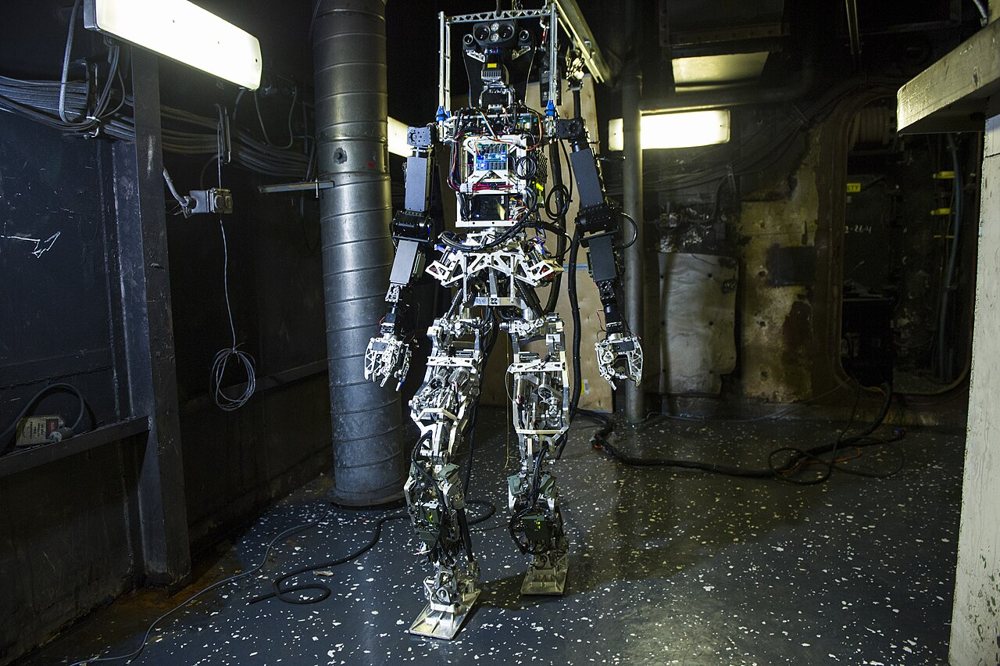 THOR / SAFFiRVirginia Tech TREC Lab (for the US Office of Naval Research) THOR / SAFFiRVirginia Tech TREC Lab (for the US Office of Naval Research) | 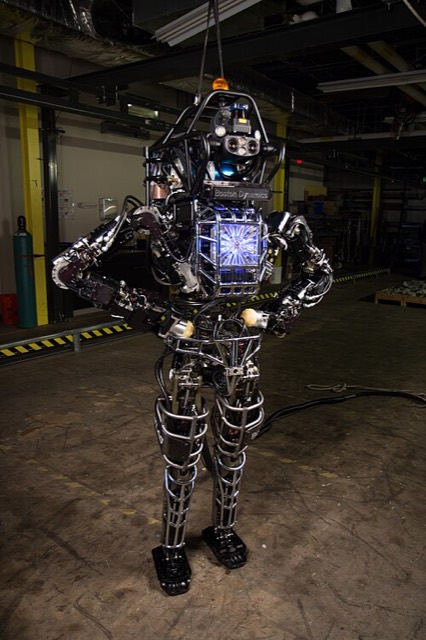 Atlas (DRC hydraulic Atlas)Boston Dynamics (for DARPA)Same job: military · Both walk · Both past robots · Similar size Atlas (DRC hydraulic Atlas)Boston Dynamics (for DARPA)Same job: military · Both walk · Both past robots · Similar size |  FEDOR (Skybot F-850)Android Technics (NPO Androidnaya Tekhnika) and Russia's Advanced Research FoundationSame job: military · Both walk · Both past robots · Similar size FEDOR (Skybot F-850)Android Technics (NPO Androidnaya Tekhnika) and Russia's Advanced Research FoundationSame job: military · Both walk · Both past robots · Similar size |
|---|---|---|---|
| First shown | 2014-11-03 | 2013-07-11 | 2016 |
| Status | Retired | Retired | Retired |
| Height | 178 cm | 188 cm | 182 cm |
| Weight | 64 kg | 150 kg | 106 kg |
| Joints | — | 28 | — |
| Speed | — | — | — |
| Payload | — | — | — |
| Battery | — | — | — |
| Price | — | $2,000,000 | — |
Sources
Figures come from press coverage. Every link below backs something on this page.
Photos and logos only identify each robot and its maker. Simbeing is not affiliated with, sponsored by or endorsing any company, and nothing here is advertising. Figures are for statistics only and are not advice of any kind. Terms of use