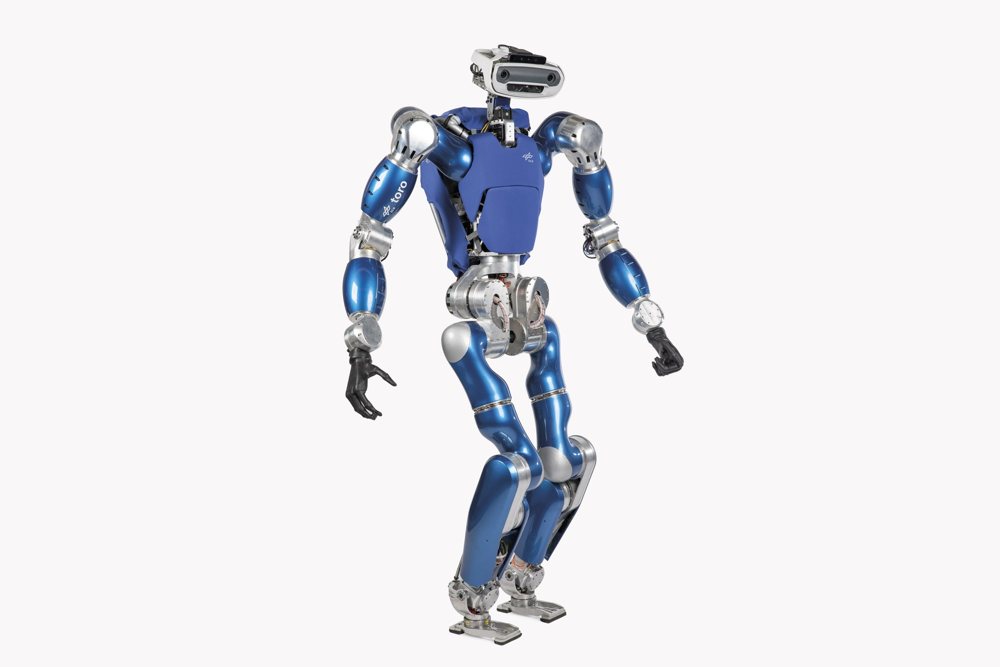
German Aerospace Center (DLR), Institute of Robotics and Mechatronics · research humanoid
TORO
A torque-controlled research humanoid built by extending DLR's 2009 walking biped with a new upper body, arms and hands; DLR lists 1.74 m, 76 kg, 39 degrees of freedom and over an hour of battery life.
- Price
- —Not published
- Height
- 174 cmTaller than 72%
- Weight
- 76 kgHeavier than 70%
- Payload
- 10 kgCarries more than 41%
- Speed
- 1.8 km/hFaster than 14%
- Battery
- 1 hRuns longer than 3%
Not sure this is the one? Find the best robot for your job Starts with: research and teaching. Five more quick questions.
Why it matters
One of the first humanoids with torque sensing in nearly every joint, letting it behave compliantly for safer contact.
Real-world use
No customers or deployments reported yet.
Maker
German Aerospace Center (DLR), Institute of Robotics and MechatronicsGovernment lab · founded 1969 · Cologne, GermanyGovernment-funded; total DLR funding EUR 1.701 billion in 2024 (52.9% government, 47.1% third-party)
How it stacks up
Against other humanoids that publish the figure. Pick a measure.
TORO is taller than 72% of the 305 other humanoids that publish a height. Bars show the 7 closest in date.
TORO is heavier than 70% of the 277 other humanoids that publish a weight. Bars show the 7 closest in date.
TORO is faster than 14% of the 122 other humanoids that publish a speed. Bars show the 7 closest in date.
TORO carries more than 41% of the 132 other humanoids that publish a payload. Bars show the 7 closest in date.
TORO has more joints than 67% of the 236 other humanoids that publish a joints. Bars show the 7 closest in date.
TORO runs longer than 3% of the 119 other humanoids that publish a battery. Bars show the 7 closest in date.
Not published by the maker: price.
What it has been shown doing
We checked public videos and press for TORO and found no clear demo of the skills we track yet.
Public attention
How much public attention TORO gets, from open data.
- No Wikipedia article of its own yet
- 2 news stories from reputable press listed on this page
Measures how much people read and write about a robot, not how good it is. Measured 2026-10-13; same method for every robot. How it is measured
What’s inside
The parts the company has talked about publicly.
- Movement
- Walks on legs · 39 joints
- Actuators & motors
- 25 motor drive units based on DLR light-weight-robot technology in the arms, legs and hip, plus two Dynamixel servos in the neck; torque sensing and active torque control in almost all joints (DLR).
- Hands
- Simplified hands with 6 DoF each (DLR, New Atlas).
- Sensors & vision
- Position and torque sensors in each joint, 6-axis force/torque sensor in each ankle, IMUs in torso and head, and in the head an ASUS Xtion Pro, two Point Grey Firefly mono cameras and an Intel RealSense SR300; DLR lists two stereo cameras and one RGB-D camera.
- Compute
- Two Intel Core i7 computers in the torso and one Core i3 in the head.
- Battery & power
- Two 48 V, 6.6 Ah lithium-ion-manganese-oxide packs, about 1 hour; DLR lists more than 60 minutes.
- Materials & build
- Mostly custom parts milled from aluminium.
- AI & software
- Real-time Linux, DLR's Links and Nodes middleware and Robotkernel hardware abstraction; impedance-based and inverse-dynamics whole-body control, walking and multi-contact balancing (DLR).
- Other details
- Legs carried over from the 2009 DLR-Biped (New Atlas); 10 kg nominal payload and 0.5 m/s speed (DLR).
Named suppliers:IntelIntel RealSenseROBOTIS (Dynamixel)ASUS
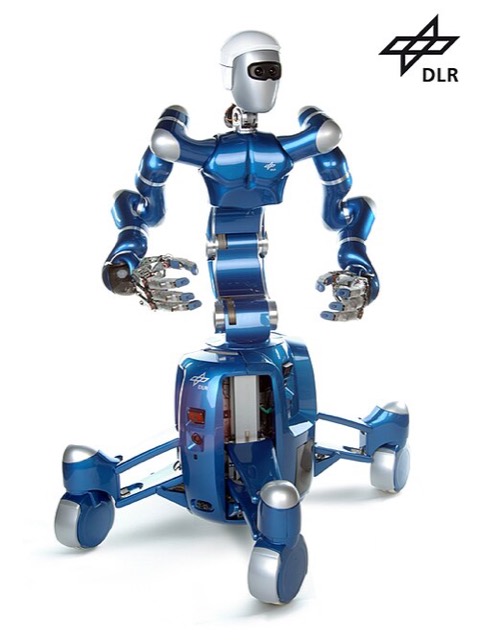
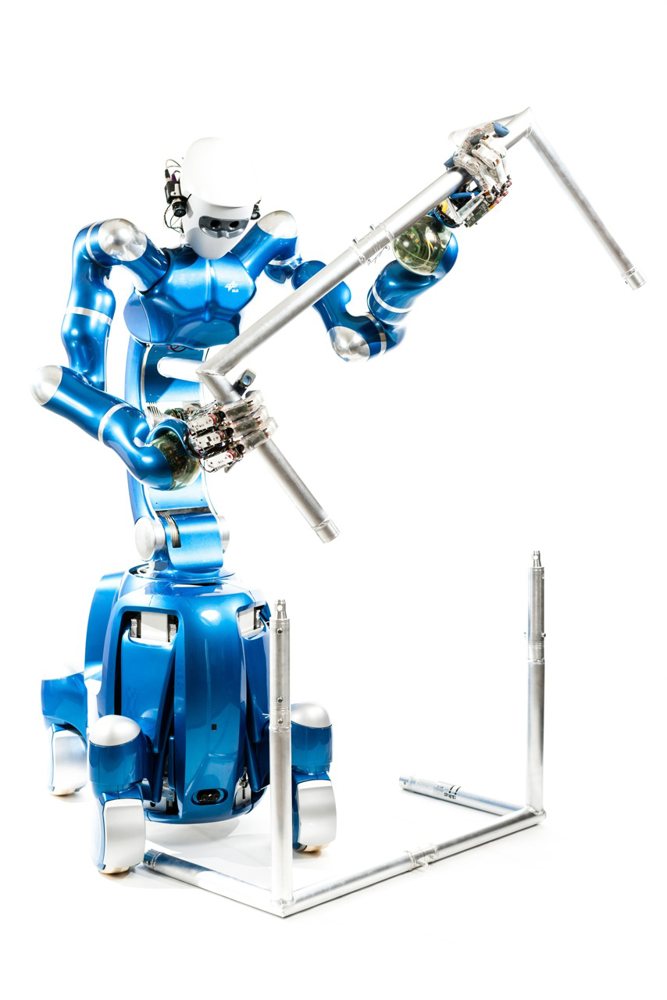
Lineage
Every German Aerospace Center (DLR) humanoid in order.
Made, sold and where
Unit counts are usually company figures; analysts often disagree.
- Price
- Not published
- How to get one
- No official buying page found
- Built
- Research unit; count not published
- Where it is sold or used
- Germany
News
The latest 2, newest first. Summaries are ours; tap through for the original.
- Shown at the ILA Berlin air show
DLR lists a 2014 ILA appearance and a HUMANOIDS 2014 overview paper.
German Aerospace Center (DLR) - TORO unveiled with new arms and hands
DLR completed TORO by adding an upper body to its walking biped.
New Atlas
Side by side with its peers
Picked by the same rules for every humanoid: another maker’s robot that moves the same way, is at the same stage and does at least one of the same main jobs, first shown within two years. Closer size and price rank higher. How we choose
| Measure | TOROGerman Aerospace Center (DLR) | 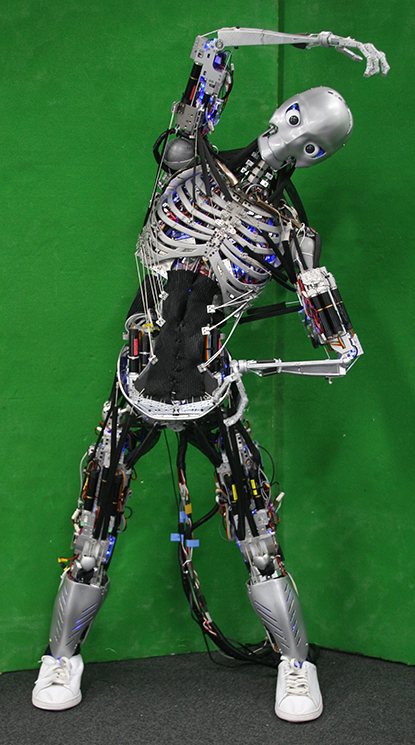 KenshiroUniversity of Tokyo JSK Lab (Masayuki Inaba, Kei Okada)Same job: research · Both walk · Both research platforms · Similar size KenshiroUniversity of Tokyo JSK Lab (Masayuki Inaba, Kei Okada)Same job: research · Both walk · Both research platforms · Similar size | No public photo yetWe only show photos we're allowed to useJAXONUniversity of Tokyo JSK Lab (team NEDO-JSK)Same job: research · Both walk · Both research platforms · Similar size | 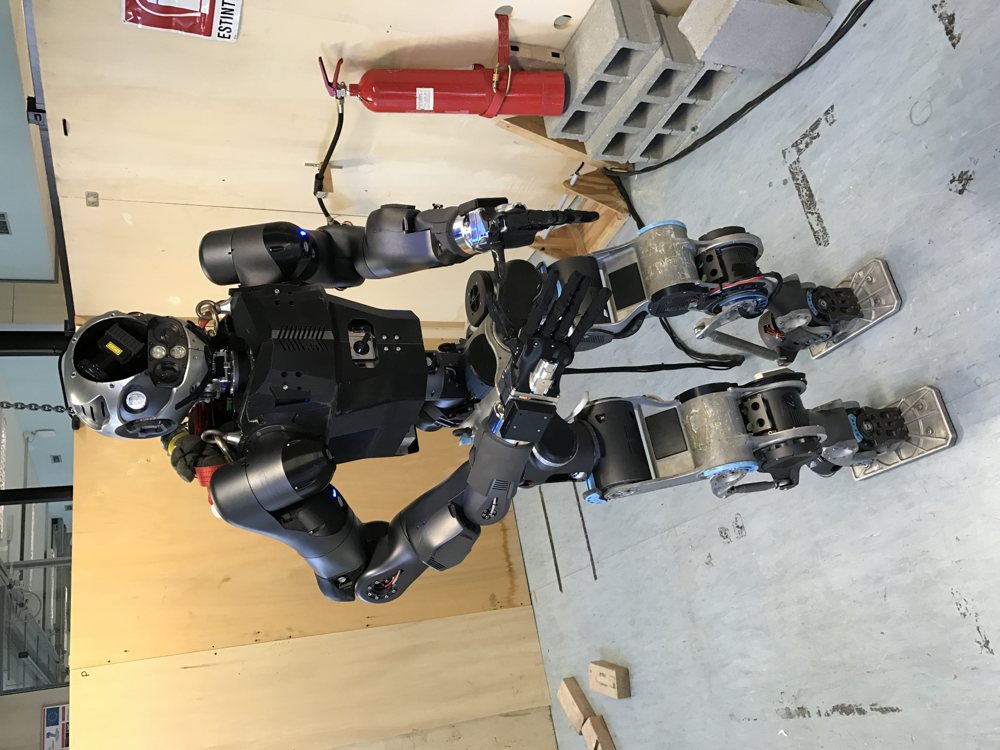 WALK-MANIstituto Italiano di Tecnologia (IIT)Same job: research · Both walk · Both research platforms · Similar size WALK-MANIstituto Italiano di Tecnologia (IIT)Same job: research · Both walk · Both research platforms · Similar size |
|---|---|---|---|---|
| First shown | 2013-03-25 | 2012-11 | 2015-06 | 2015-06 |
| Status | Research | Research | Research | Research |
| Height | 174 cm | 158 cm | 188 cm | 185 cm |
| Weight | 76 kg | 50 kg | 110 kg | 120 kg |
| Joints | 39 | 64 | 33 | — |
| Speed | 1.8 km/h | — | — | — |
| Payload | 10 kg | — | — | — |
| Battery | 1 h | — | — | — |
| Price | — | — | — | — |
Sources
Figures come from the maker. Every link below backs something on this page.
Photos and logos only identify each robot and its maker. Simbeing is not affiliated with, sponsored by or endorsing any company, and nothing here is advertising. Figures are for statistics only and are not advice of any kind. Terms of use