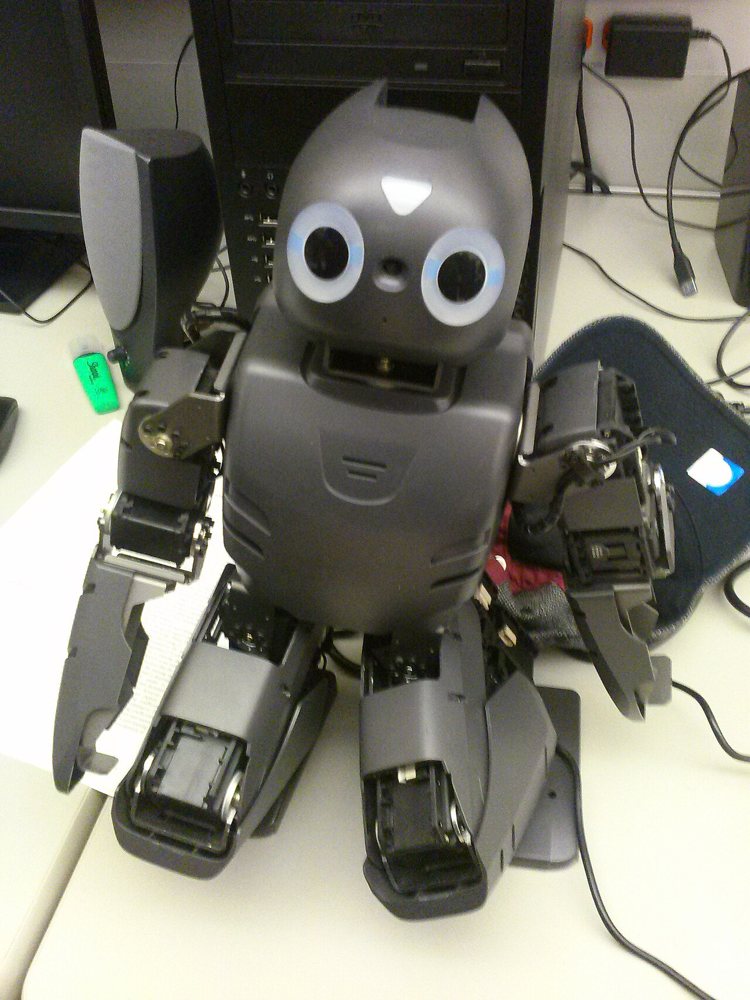
ROBOTIS · research humanoid
DARwIn-OP
A 46 cm research humanoid whose name stands for Dynamic Anthropomorphic Robot with Intelligence - Open Platform. It walks, gets up after falls, tracks objects and plays robot soccer, and its designs and C++ software were published openly. Kept despite being under 60 cm because it was a widely used research platform; the DARwIn-OP2 revision is folded into this entry.
- Price
- $12,000Cheaper than 72%
- Height
- 46 cmTaller than 1%
- Weight
- 2.9 kgHeavier than 1%
- Payload
- —Not published
- Speed
- 0.9 km/hFaster than 3%
- Battery
- —Not published
Not sure this is the one? Find the best robot for your job Starts with: research and teaching. Five more quick questions.
Why it matters
An early fully open hardware and software small humanoid, built with NSF funding, that won the RoboCup Kid Size league in 2011, 2012 and 2013.
Real-world use
Sold to universities and labs as a research and teaching platform; later revised as DARwIn-OP2 and succeeded by ROBOTIS OP3.
Timeline
- First shown
- 2010
- Released
- 2010
Maker
ROBOTISCompany · South KoreaHow it stacks up
Against other humanoids that publish the figure. Pick a measure.
DARwIn-OP is taller than 1% of the 305 other humanoids that publish a height. Bars show the 7 closest in date.
DARwIn-OP is heavier than 1% of the 277 other humanoids that publish a weight. Bars show the 7 closest in date.
DARwIn-OP is faster than 3% of the 122 other humanoids that publish a speed. Bars show the 7 closest in date.
DARwIn-OP has more joints than 9% of the 236 other humanoids that publish a joints. Bars show the 7 closest in date.
DARwIn-OP costs less than 72% of the 85 other humanoids that publish a price. Bars show the 7 closest in date.
Not published by the maker: payload, battery.
Public attention
A historic robot: no longer sold or in use, so it is not ranked against current humanoids.
- 402 views of its Wikipedia article in the last 90 days (DARwIn-OP)
- 1 news story from reputable press listed on this page
Measures how much people read and write about a robot, not how good it is. Measured 2026-10-13; same method for every robot. How it is measured
What’s inside
The parts the company has talked about publicly.
- Movement
- Walks on legs · 20 joints
- Actuators & motors
- 20 DoF (6 per leg, 3 per arm, 2 neck), each joint a DYNAMIXEL MX-28T servo with contactless absolute encoder.
- Hands
- No hands; simple arm ends.
- Sensors & vision
- HD camera, 3-axis gyroscope, 3-axis accelerometer, stereo microphones; foot force sensors optional.
- Compute
- 1.6 GHz Intel Atom main computer plus a 72 MHz ARM Cortex-M3 sub-controller; wireless networking.
- Battery & power
- 11.1 V 1000 mAh lithium-polymer, about 30 minutes, or external power.
- Materials & build
- 45.5 cm tall, 2.9 kg.
- AI & software
- Ubuntu Linux and the open-source DARwIn-OP C++ framework; hardware designs published openly.
- Other details
- Developed with Virginia Tech (RoMeLa), the University of Pennsylvania (GRASP Lab) and Purdue University, supported by a USD 1.2 million NSF grant. Won the RoboCup KidSize league in 2011, 2012 and 2013.
Named suppliers:IntelROBOTIS (Dynamixel)
Lineage
Every ROBOTIS (with Virginia Tech, University of Pennsylvania and Purdue University) humanoid in order.
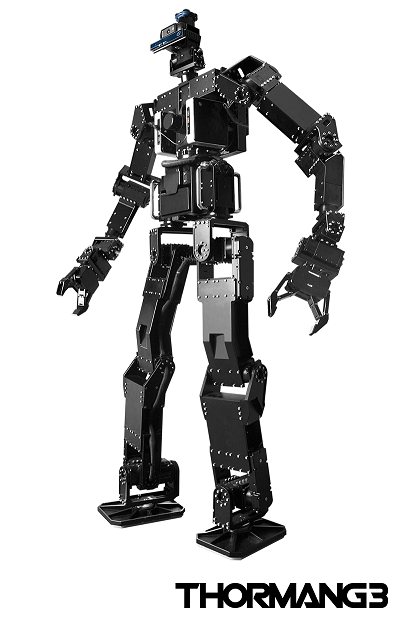
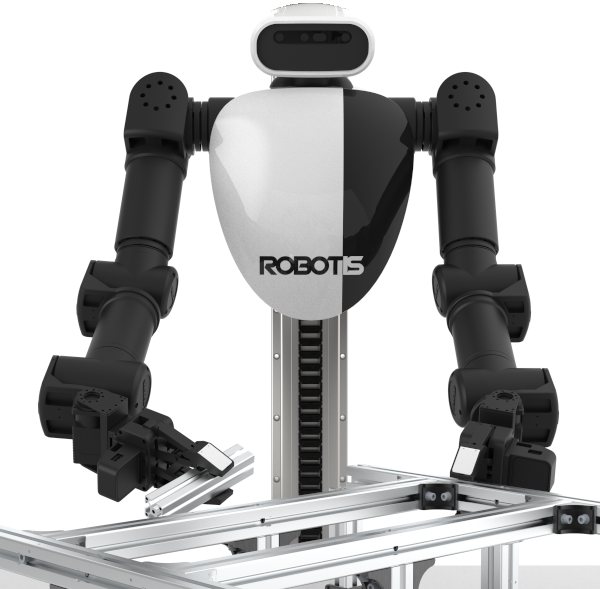
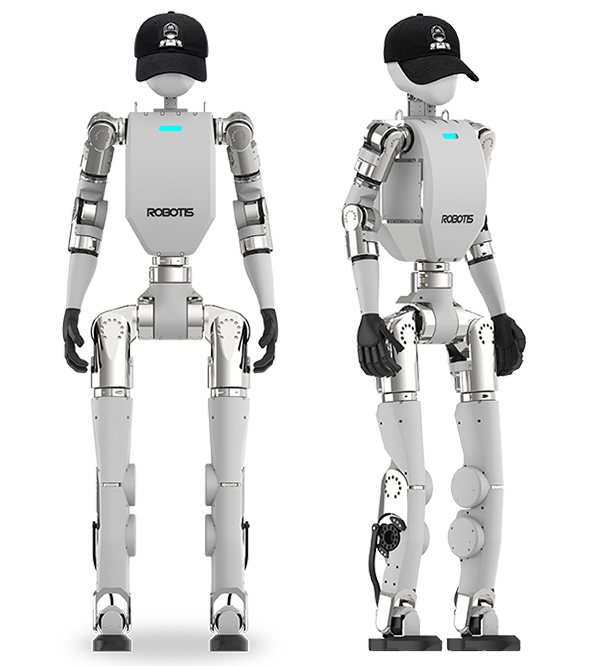
Watch DARwIn-OP
Made, sold and where
Unit counts are usually company figures; analysts often disagree.
- Price
- $12,000About USD 12,000; now discontinued
- How to get one
- No official buying page found
- Sold or delivered
- Sold commercially (listed at about USD 12,000); now discontinued
- Where it is sold or used
- South Korea (ROBOTIS)
- Customers and pilots
- University research and teaching labs; Team DARwIn (RoboCup)
News
The latest 1, newest first. Summaries are ours; tap through for the original.
- DARwIn-OP learns Dance Dance Revolution
A Purdue student's summer project taught the robot to step on a custom dance pad in response to on-screen arrows.
IEEE Spectrum
Side by side with its peers
Picked by the same rules for every humanoid: another maker’s robot that moves the same way, is at the same stage and does at least one of the same main jobs, first shown within two years. Closer size and price rank higher. How we choose
| Measure | DARwIn-OPROBOTIS (with Virginia Tech, University of Pennsylvania and Purdue University) | No public photo yetWe only show photos we're allowed to usePneubornOsaka University (Koh Hosoda lab)Same job: research · Both walk · Both past robots · Similar size | No public photo yetWe only show photos we're allowed to useCOMAN (COmpliant huMANoid)Istituto Italiano di Tecnologia (IIT)Same job: research · Both walk · Both past robots · Similar size | 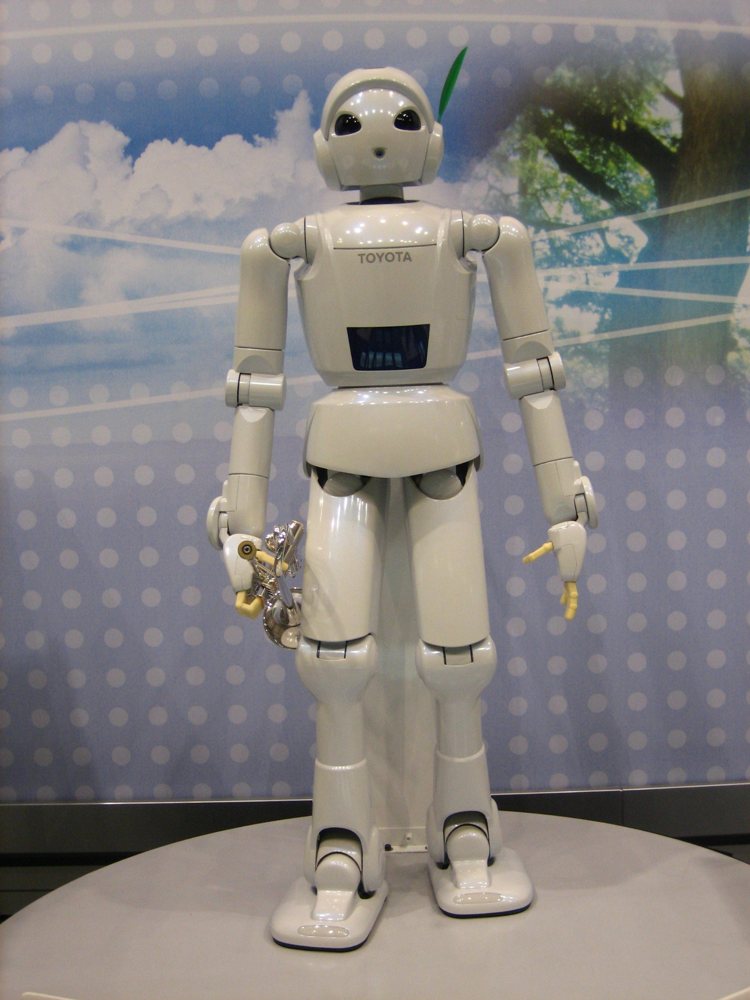 Toyota Partner Robot (running humanoid)Toyota Motor CorporationSame job: research · Both walk · Both past robots Toyota Partner Robot (running humanoid)Toyota Motor CorporationSame job: research · Both walk · Both past robots |
|---|---|---|---|---|
| First shown | 2010 | 2011 | 2012 | 2009-07 |
| Status | Discontinued | Retired | Retired | Retired |
| Height | 46 cm | 80 cm | 95 cm | — |
| Weight | 2.9 kg | — | 31.2 kg | — |
| Joints | 20 | 26 | 25 | — |
| Speed | 0.9 km/h | — | — | 7 km/h |
| Payload | — | — | — | — |
| Battery | — | — | — | — |
| Price | $12,000 | — | — | — |
Sources
Figures come from press coverage. Every link below backs something on this page.
Photos and logos only identify each robot and its maker. Simbeing is not affiliated with, sponsored by or endorsing any company, and nothing here is advertising. Figures are for statistics only and are not advice of any kind. Terms of use