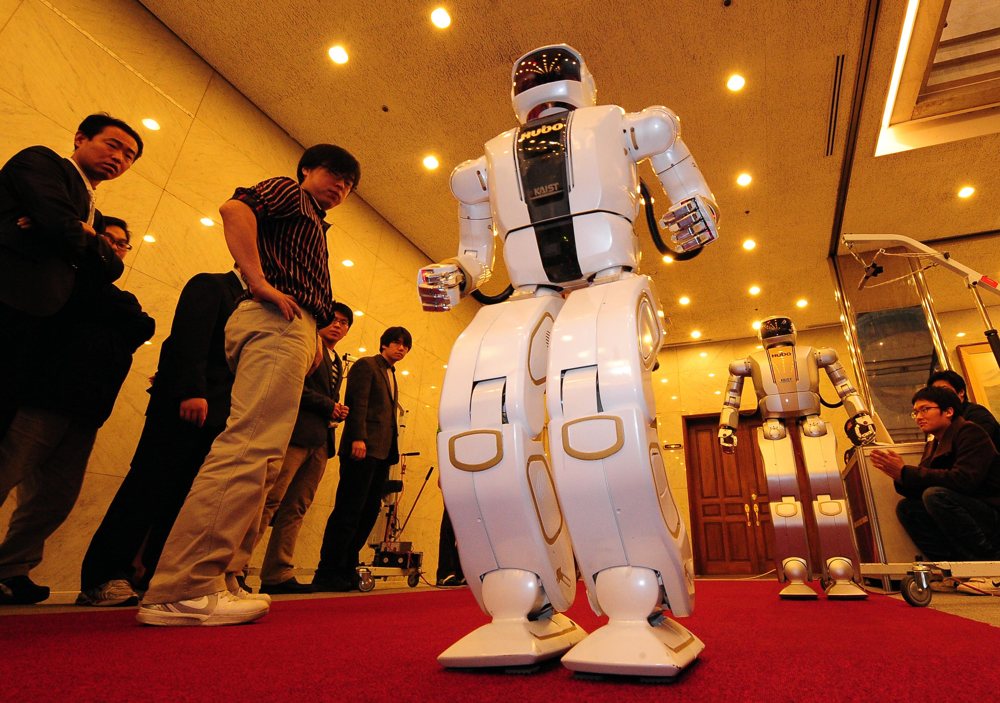
KAIST (Korea Advanced Institute of Science and Technology) · research humanoid
HUBO 2
KHR-4
HUBO2 uses a stretched-leg walking gait and can run at up to 3.6 km/h; KAIST's own laboratory history dates its development to 2009.
- Price
- $400,000Cheaper than 2%
- Height
- 125 cmTaller than 17%
- Weight
- 45 kgHeavier than 30%
- Payload
- —Not published
- Speed
- 3.6 km/hFaster than 30%
- Battery
- 2 hRuns longer than 15%
Not sure this is the one? Find the best robot for your job Starts with: research and teaching. Five more quick questions.
Why it matters
Walked with straight knees, unlike most bipeds of the time, and could run.
Real-world use
A later HUBO derivative (DRC-HUBO) won the DARPA Robotics Challenge finals in June 2015.
Timeline
- First shown
- 2008
- Released
- Not yet
Maker
KAIST (Korea Advanced Institute of Science and Technology)University lab · Daejeon, South KoreaAgency for Defense Development (5.7 billion won for Pibot)
How it stacks up
Against other humanoids that publish the figure. Pick a measure.
HUBO 2 (KHR-4) is taller than 17% of the 305 other humanoids that publish a height. Bars show the 7 closest in date.
HUBO 2 (KHR-4) is heavier than 30% of the 277 other humanoids that publish a weight. Bars show the 7 closest in date.
HUBO 2 (KHR-4) is faster than 30% of the 122 other humanoids that publish a speed. Bars show the 7 closest in date.
HUBO 2 (KHR-4) has more joints than 71% of the 236 other humanoids that publish a joints. Bars show the 7 closest in date.
HUBO 2 (KHR-4) runs longer than 15% of the 119 other humanoids that publish a battery. Bars show the 7 closest in date.
HUBO 2 (KHR-4) costs less than 2% of the 85 other humanoids that publish a price. Bars show the 7 closest in date.
Not published by the maker: payload.
Public attention
A historic robot: no longer sold or in use, so it is not ranked against current humanoids.
- 1,098 views of its Wikipedia article in the last 90 days (HUBO)
- 2 news stories from reputable press listed on this page
Measures how much people read and write about a robot, not how good it is. Measured 2026-10-13; same method for every robot. How it is measured
What’s inside
The parts the company has talked about publicly.
- Movement
- Walks on legs · 41 joints
- Actuators & motors
- 44 brushless DC motors: 19 x 200 W and 6 x 100 W and 9 x 11 W at 48 V, plus 10 x 0.75 W at 12 V.
- Hands
- 5 DoF per hand.
- Sensors & vision
- Camera, three-axis force-torque sensors, two-axis inertial sensor and two-axis tilt sensor.
- Compute
- Two PC/104 embedded computers with solid-state drives.
- Battery & power
- 480 Wh lithium-polymer battery; up to 2 hours with movement and 7 hours without movement (IEEE Spectrum, 2010).
- AI & software
- Windows XP with RTX real-time extension.
- Other details
- Straight-leg gait enables faster walking with lower energy consumption (IEEE Spectrum, 2010).
Lineage
Every KAIST Hubo Lab (Jun-Ho Oh) humanoid in order.
- No public photo yetWe only show photos we're allowed to useKHR-22004Retired
 HUBO (KHR-3)2004Retired
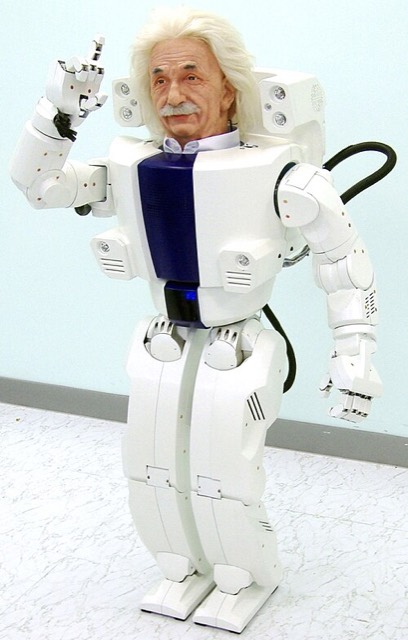 Albert HUBO2005Discontinued
- HUBO 2 (KHR-4)2008Discontinued
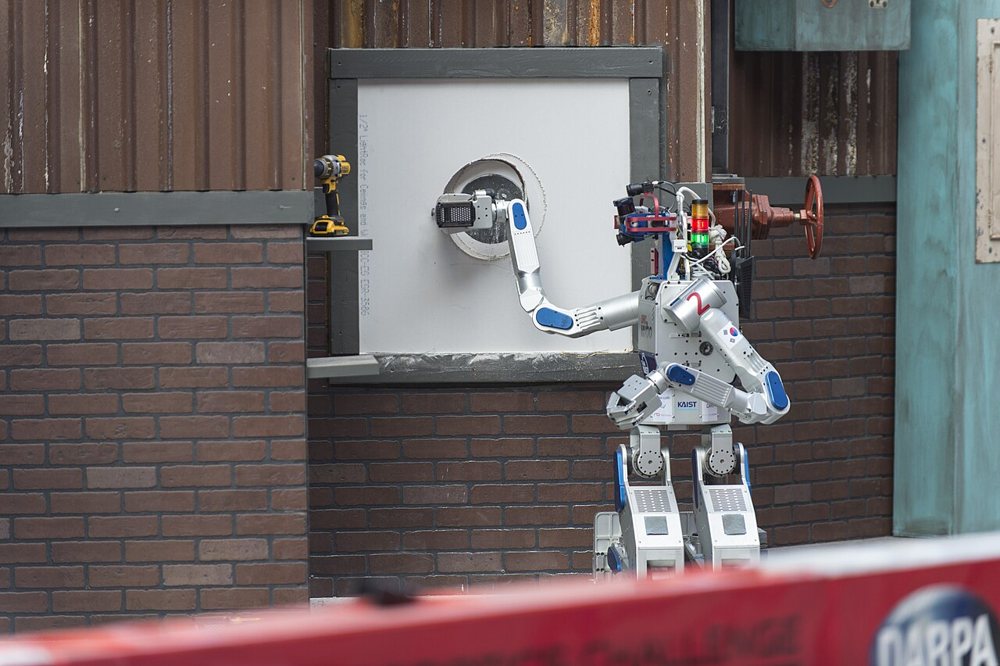 DRC-HUBO2015Retired
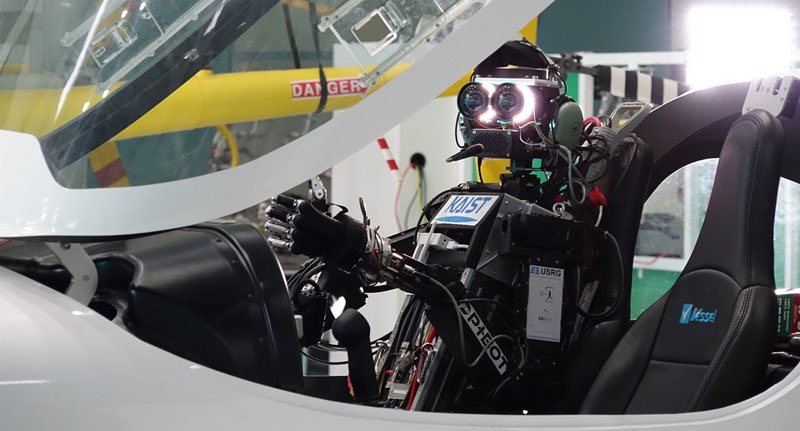 Pibot2023Prototype
KAIST (Korea Advanced Institute of Science and Technology) also makes 1 machine. See every KAIST (Korea Advanced Institute of Science and Technology) robot
Watch HUBO 2 (KHR-4)
Made, sold and where
Unit counts are usually company figures; analysts often disagree.
- Price
- $400,000US$400,000
- How to get one
- No official buying page found
- Sold or delivered
- Commercialised as a research platform, with customers in China and Singapore (New Atlas, 2013).
News
The latest 2, newest first. Summaries are ours; tap through for the original.
- Rainbow Robotics founded from KAIST HUBO research
KAIST researchers founded Rainbow Robotics, originally Rainbow Co., Ltd., under Professor Jun-Ho Oh.
Rainbow Robotics - A General-Purpose System for Teleoperation of the DRC-HUBO Humanoid Robot
The DRC-HUBO research team's development table lists HUBO2+ in 2011 at 43 kg.
Journal of Field Robotics / Matt Zucker et al.
Side by side with its peers
Picked by the same rules for every humanoid: another maker’s robot that moves the same way, is at the same stage and does at least one of the same main jobs, first shown within two years. Closer size and price rank higher. How we choose
| Measure | HUBO 2 (KHR-4)KAIST Hubo Lab (Jun-Ho Oh) | 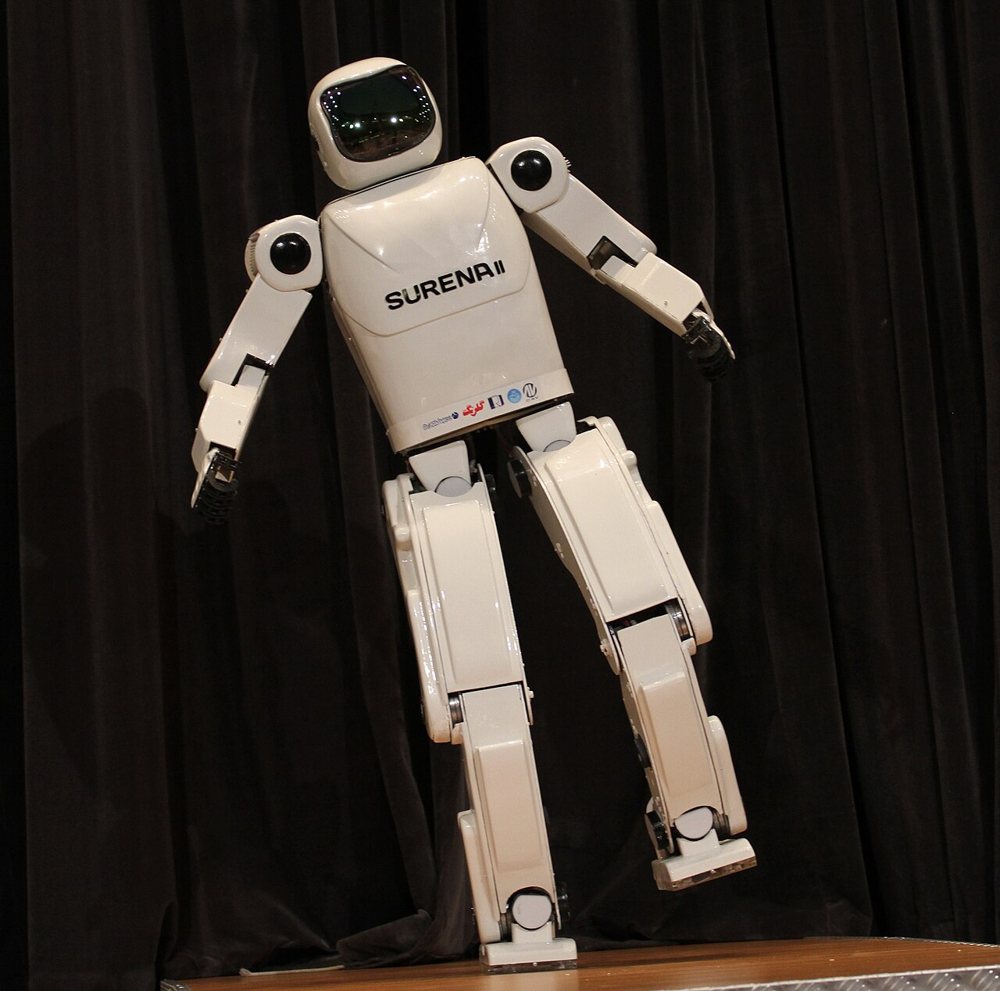 Surena IIUniversity of Tehran, Center for Advanced VehiclesSame job: research · Both walk · Both past robots · Similar size Surena IIUniversity of Tehran, Center for Advanced VehiclesSame job: research · Both walk · Both past robots · Similar size | 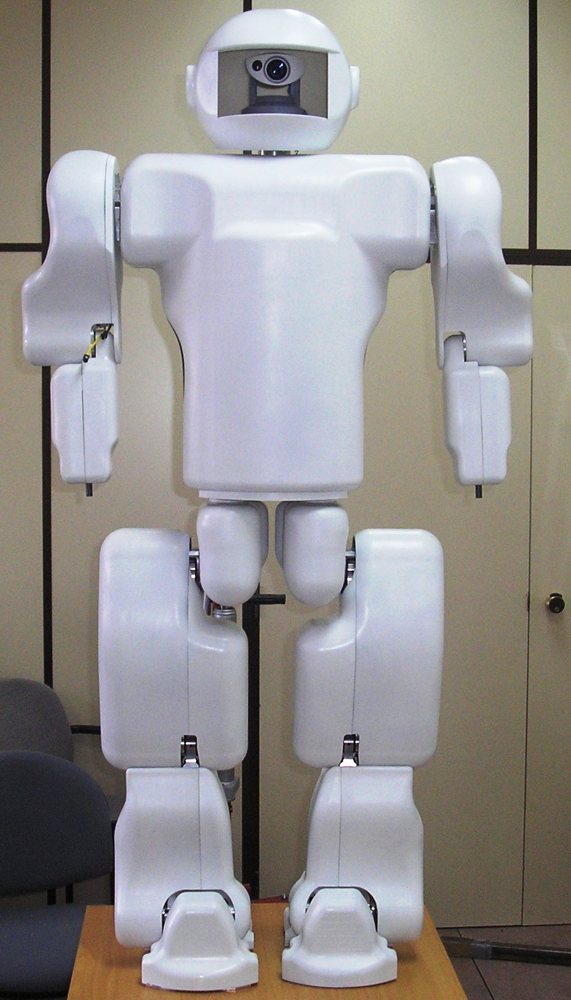 Rh-1Universidad Carlos III de Madrid (RoboticsLab)Same job: research · Both walk · Both past robots · Similar size Rh-1Universidad Carlos III de Madrid (RoboticsLab)Same job: research · Both walk · Both past robots · Similar size | 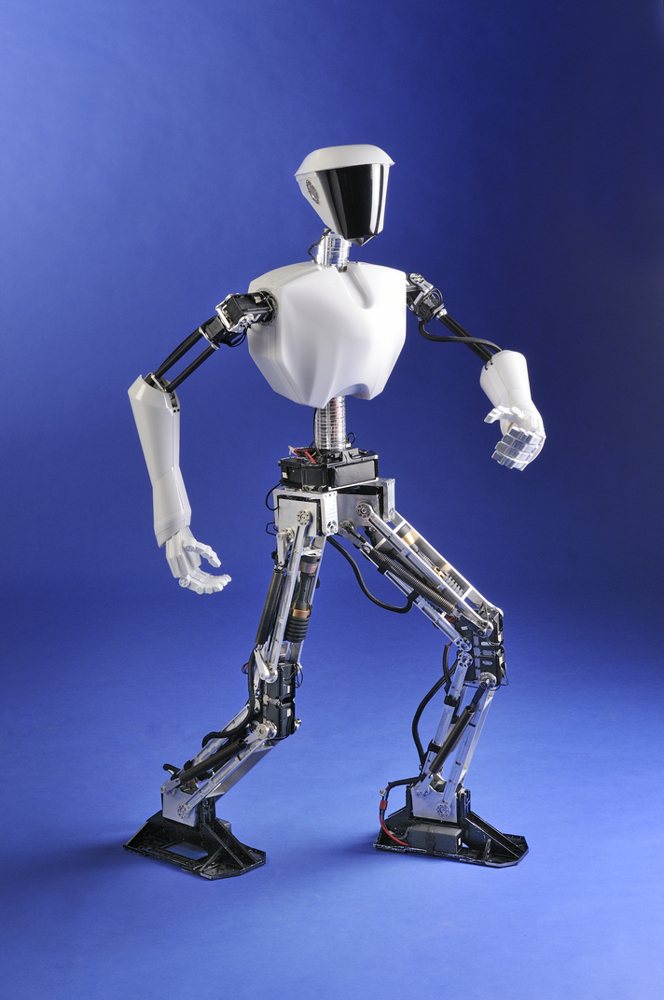 CHARLIRoMeLa (Robotics & Mechanisms Laboratory)Same job: research · Both walk · Both past robots · Similar size CHARLIRoMeLa (Robotics & Mechanisms Laboratory)Same job: research · Both walk · Both past robots · Similar size |
|---|---|---|---|---|
| First shown | 2008 | 2010-07-03 | 2007 | 2011 |
| Status | Discontinued | Retired | Retired | Retired |
| Height | 125 cm | 145 cm | 130 cm | 141 cm |
| Weight | 45 kg | 45 kg | 50 kg | 12.1 kg |
| Joints | 41 | 22 | 21 | 25 |
| Speed | 3.6 km/h | 0.1 km/h | — | 1.4 km/h |
| Payload | — | — | — | — |
| Battery | 2 h | — | 0.5 h | — |
| Price | $400,000 | — | — | — |
Sources
Figures come from press coverage. Every link below backs something on this page.
Photos and logos only identify each robot and its maker. Simbeing is not affiliated with, sponsored by or endorsing any company, and nothing here is advertising. Figures are for statistics only and are not advice of any kind. Terms of use