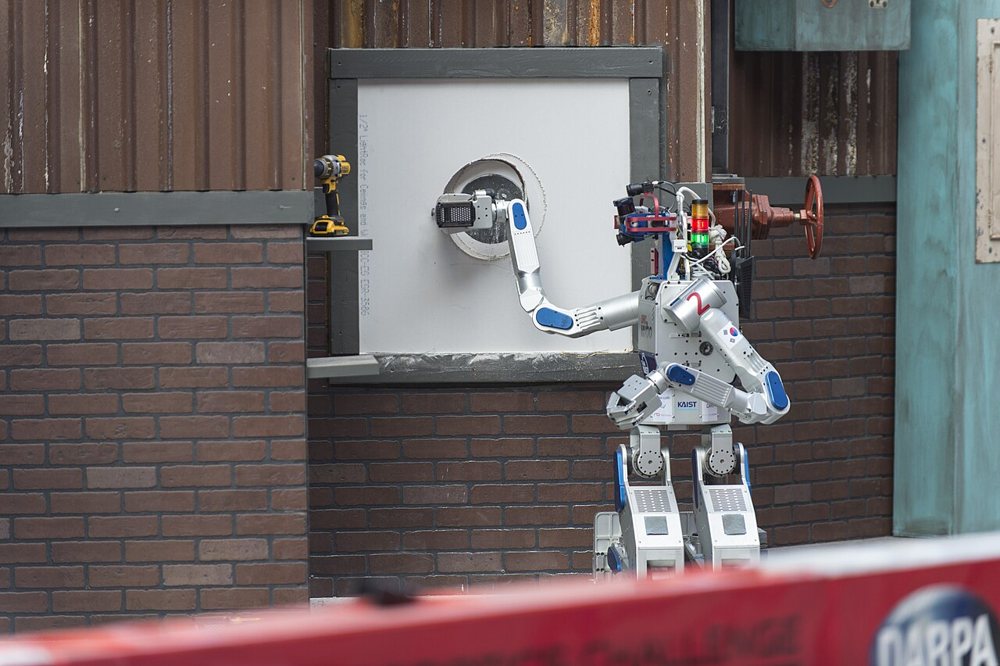
KAIST (Korea Advanced Institute of Science and Technology) · research humanoid
DRC-HUBO
A version of KAIST's HUBO humanoid redesigned for disaster response: it could kneel and roll on wheels at its knees for faster, more stable travel, then stand to use tools and climb stairs.
- Price
- —Not published
- Height
- —Not published
- Weight
- —Not published
- Payload
- —Not published
- Speed
- —Not published
- Battery
- —Not published
Not sure this is the one? Find the best robot for your job Starts with: research and teaching. Five more quick questions.
Why it matters
Won the 2015 DARPA Robotics Challenge Finals and its $2 million prize, completing all eight tasks in 44:28.
Real-world use
No customers or deployments reported yet.
Timeline
- Released
- Not yet
Maker
KAIST (Korea Advanced Institute of Science and Technology)University lab · Daejeon, South KoreaAgency for Defense Development (5.7 billion won for Pibot)
Public attention
A historic robot: no longer sold or in use, so it is not ranked against current humanoids.
- No Wikipedia article of its own yet
- 2 news stories from reputable press listed on this page
Measures how much people read and write about a robot, not how good it is. Measured 2026-10-13; same method for every robot. How it is measured
What’s inside
The parts the company has talked about publicly.
- Movement
- Walks on legs
- Actuators & motors
- Maxon EC-Powermax 30 and RE-Max 29 motors.
- Hands
- Gripper hands; each arm-and-hand assembly has 8 DoF.
- Sensors & vision
- Rainbow Robotics force/torque sensors at the end of each limb, ADIS-16480 IMU, KVH-1750 fibre-optic gyro, two optical-flow sensors on the shins, and a head camera with a Hokuyo 2D lidar.
- Compute
- Intel NUC PC for head sensing and motion.
- Battery & power
- Two lithium batteries, about 4 hours of operation.
- Materials & build
- Aluminium.
- AI & software
- Linux with PODO, a motion-control framework developed at KAIST.
- Other details
- Wheels at the knees let it kneel and roll for speed and stability, then stand to walk; 32 DoF and 80 kg.
Lineage
Every KAIST (Team KAIST) with Rainbow Robotics humanoid in order.
- No public photo yetWe only show photos we're allowed to useKHR-22004Retired
 HUBO (KHR-3)2004Retired
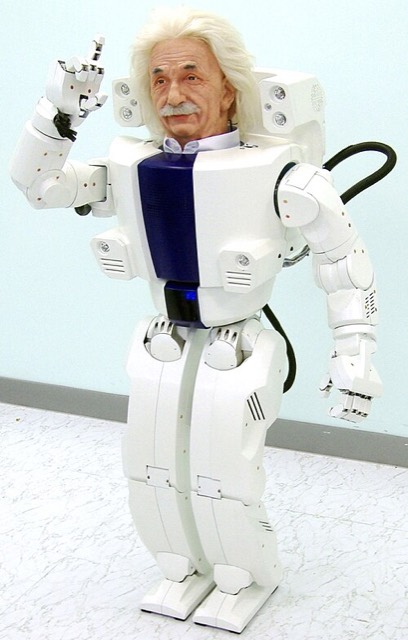 Albert HUBO2005Discontinued
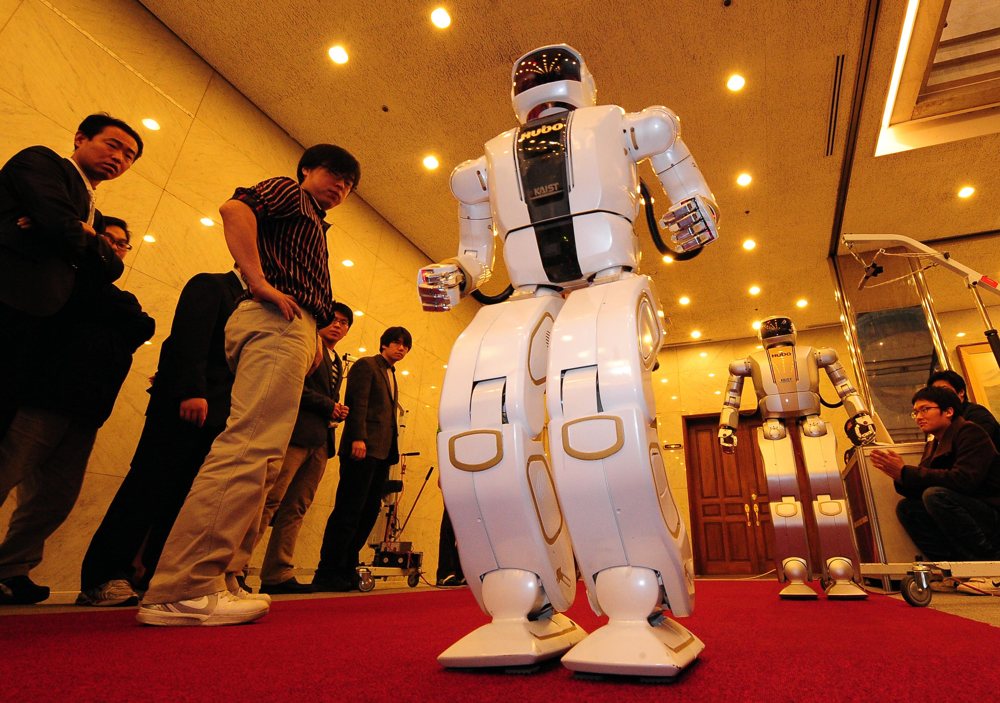 HUBO 2 (KHR-4)2008Discontinued
- DRC-HUBO2015Retired
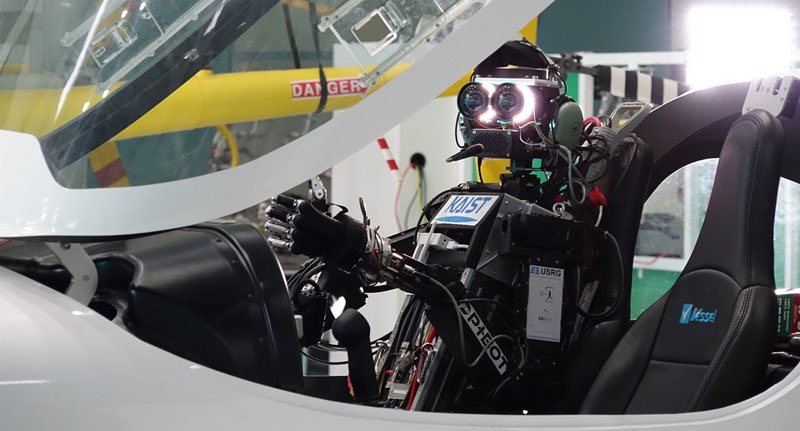 Pibot2023Prototype
KAIST (Korea Advanced Institute of Science and Technology) also makes 1 machine. See every KAIST (Korea Advanced Institute of Science and Technology) robot
Watch DRC-HUBO
Made, sold and where
Unit counts are usually company figures; analysts often disagree.
- Price
- Not published
- How to get one
- No official buying page found
- Sold or delivered
- Not sold as DRC-HUBO
- Where it is sold or used
- Competed in the United States (Pomona, California)
News
The latest 2, newest first. Summaries are ours; tap through for the original.
- Wins the DARPA Robotics Challenge Finals
Team KAIST finished all eight tasks in 44:28 to take the $2 million first prize.
Christian Science Monitor - KAIST admitted to DRC Finals as self-funded team
After SCHAFT left the funded track, DARPA admitted KAIST, which had scored 8 points at the 2013 Trials.
Defense One
Side by side with its peers
Picked by the same rules for every humanoid: another maker’s robot that moves the same way, is at the same stage and does at least one of the same main jobs, first shown within two years. Closer size and price rank higher. How we choose
| Measure | DRC-HUBOKAIST (Team KAIST) with Rainbow Robotics | 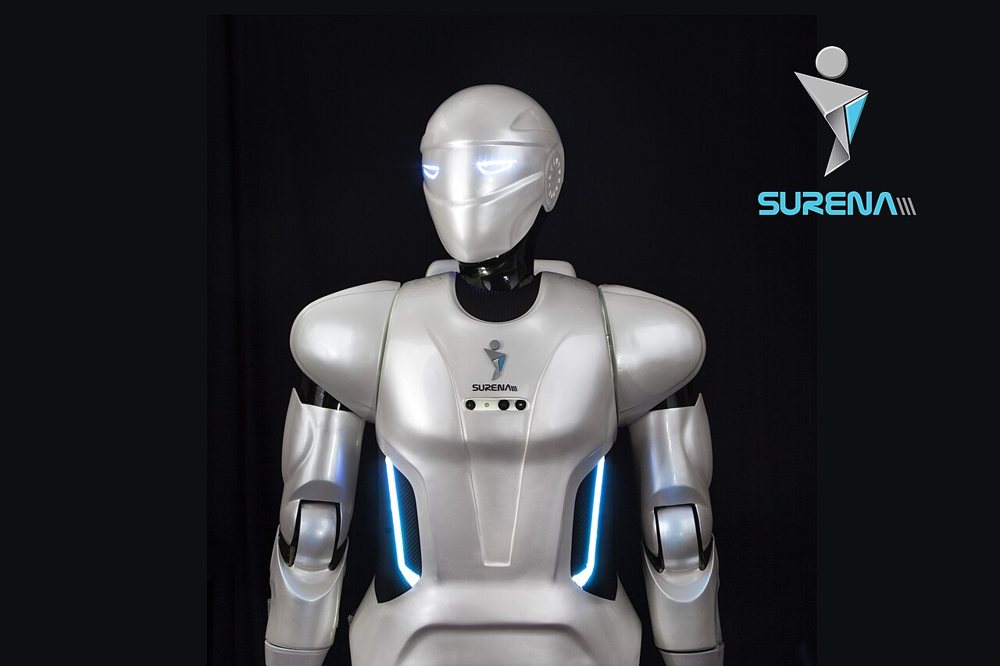 Surena IIIUniversity of Tehran, Center for Advanced Systems and Technologies (CAST)Same job: research · Both walk · Both past robots Surena IIIUniversity of Tehran, Center for Advanced Systems and Technologies (CAST)Same job: research · Both walk · Both past robots | 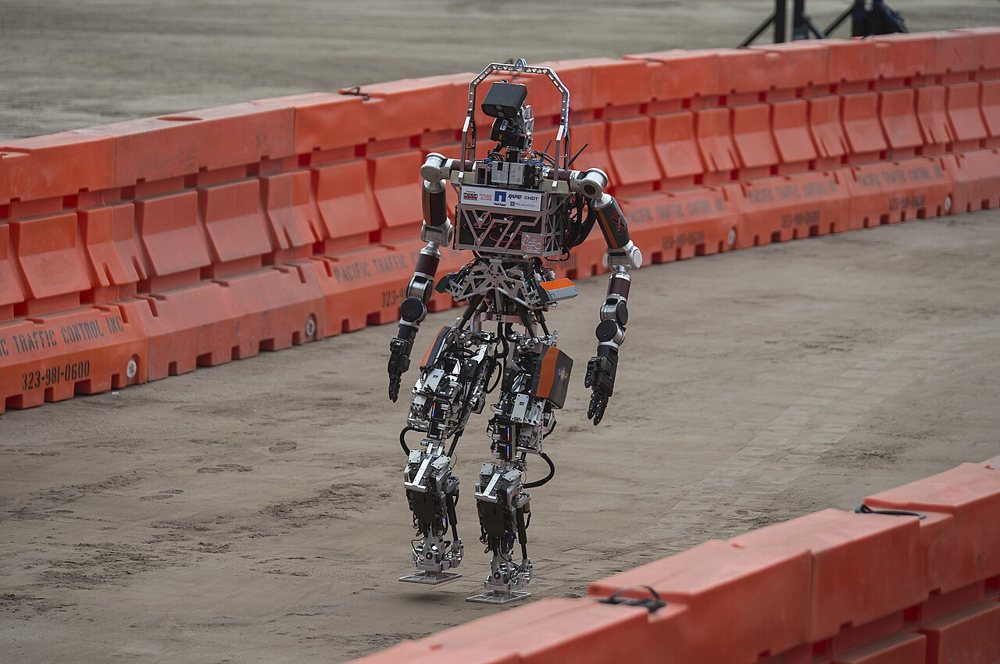 ESCHERVirginia Tech TREC Lab (Team VALOR)Same job: research · Both walk · Both past robots ESCHERVirginia Tech TREC Lab (Team VALOR)Same job: research · Both walk · Both past robots | 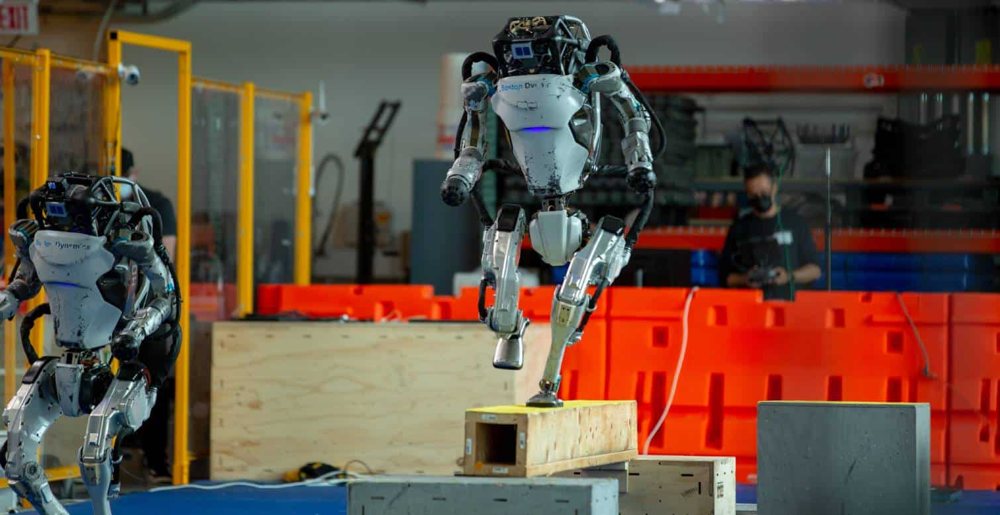 Atlas (next generation)Boston DynamicsSame job: research · Both walk · Both past robots Atlas (next generation)Boston DynamicsSame job: research · Both walk · Both past robots |
|---|---|---|---|---|
| First shown | 2015-06-05 | 2015-11 | 2015-06 | 2016-02-23 |
| Status | Retired | Retired | Retired | Retired |
| Height | — | 190 cm | — | 175 cm |
| Weight | — | 98 kg | — | 82 kg |
| Joints | — | 31 | — | — |
| Speed | — | — | — | — |
| Payload | — | — | — | — |
| Battery | — | — | — | — |
| Price | — | — | — | — |
Sources
Figures come from public sources. Every link below backs something on this page.
Photos and logos only identify each robot and its maker. Simbeing is not affiliated with, sponsored by or endorsing any company, and nothing here is advertising. Figures are for statistics only and are not advice of any kind. Terms of use