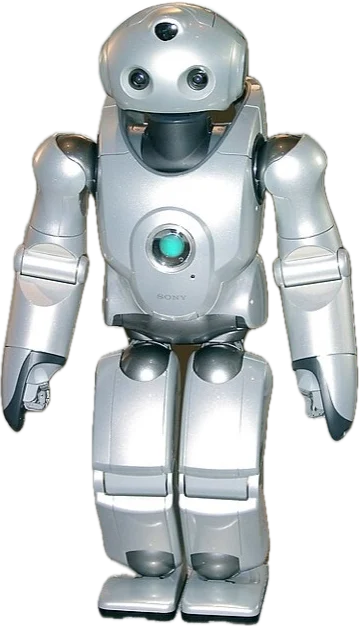
Sony Group Corporation · entertainment humanoid
QRIO
SDR-4X
A 58 cm entertainment humanoid that could walk, dance and recognise faces and voices. Sony announced SDR-4X in March 2002 at approximately 6.5 kg including battery and memory; the improved SDR-4X II became QRIO in 2003, with running demonstrated that December (Sony, 2002–2003).
- Price
- —never sold
- Height
- 58 cmTaller than 2%
- Weight
- 6.5 kgHeavier than 2%
- Payload
- —Not published
- Speed
- 1.1 km/hFaster than 6%
- Battery
- 1 hRuns longer than 3%
Not sure this is the one? Find the best robot for your job Starts with: greet and guide customers. Five more quick questions.
Why it matters
Listed by Guinness World Records (2005 edition) as the first bipedal robot able to run, with both feet leaving the ground.
Real-world use
Used for demonstrations and research only; Sony stopped development on 26 January 2006.
Timeline
- Released
- Not yet
Maker
Sony Group CorporationCompany · founded 1946 · Tokyo, Japanpublic company (TYO: 6758; NYSE: SONY)
How it stacks up
Against other humanoids that publish the figure. Pick a measure.
QRIO (SDR-4X) is taller than 2% of the 305 other humanoids that publish a height. Bars show the 7 closest in date.
QRIO (SDR-4X) is heavier than 2% of the 277 other humanoids that publish a weight. Bars show the 7 closest in date.
QRIO (SDR-4X) is faster than 6% of the 122 other humanoids that publish a speed. Bars show the 7 closest in date.
QRIO (SDR-4X) has more joints than 65% of the 236 other humanoids that publish a joints. Bars show the 7 closest in date.
QRIO (SDR-4X) runs longer than 3% of the 119 other humanoids that publish a battery. Bars show the 7 closest in date.
Not published by the maker: payload, price.
Public attention
A historic robot: no longer sold or in use, so it is not ranked against current humanoids.
- 1,489 views of its Wikipedia article in the last 90 days (QRIO)
- 2 news stories from reputable press listed on this page
Measures how much people read and write about a robot, not how good it is. Measured 2026-10-13; same method for every robot. How it is measured
What’s inside
The parts the company has talked about publicly.
- Movement
- Walks on legs · 38 joints
- Actuators & motors
- 38 motors (Sony ISA actuators) controlled in real time, 38 degrees of freedom (head 4, trunk 2, arms 5 each, fingers 5 each, legs 6 each); Sony quoted about 30% more starting torque, 15% more rated torque and 20% better efficiency than SDR-3X.
- Hands
- Five independently moving fingers per hand; later prototypes got improved hands and wrists.
- Sensors & vision
- Two CCD cameras (110,000 pixels each) for stereo distance sensing, seven microphones to locate and identify speakers, 3-axis accelerometer and gyro, and four force sensors in each foot; later prototypes added a third camera in the forehead.
- Compute
- Two 64-bit RISC processors with 128 MB RAM on the 2002 SDR-4X; programs stored on a 16 MB Memory Stick.
- Battery & power
- Lithium batteries; about 1 hour per charge on the fourth-generation unit.
- AI & software
- Sony Aperios real-time OS with the OPEN-R platform; real-time adaptive motion control to recover from falls and stand up; face and voice recognition to remember people.
- Other details
- About 58 cm and 6.5-7.3 kg. Guinness World Records (2005) credited it as the first bipedal robot able to run (23 cm/s).
Lineage
Every Sony humanoid in order.
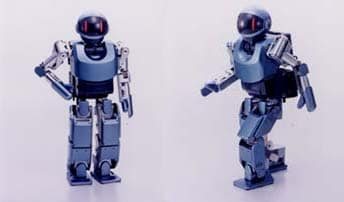 SDR-3X2000Retired
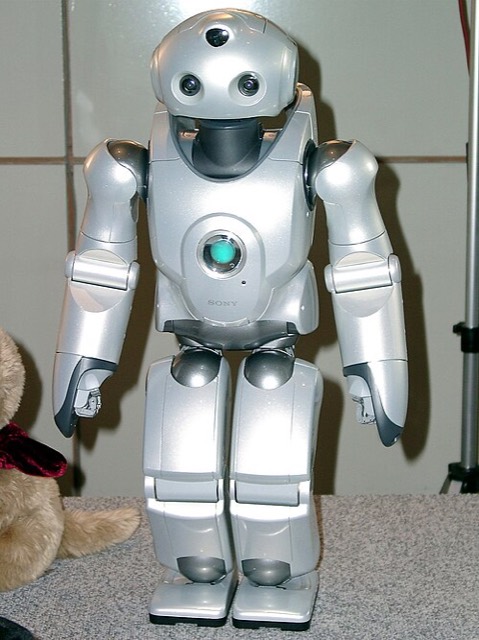 QRIO (SDR-4X)2002Discontinued
- No public photo yetWe only show photos we're allowed to useHANAMOFLOR ('Hana-chan')2023Prototype
Sony Group Corporation also makes 7 machines. See every Sony Group Corporation robot
Made, sold and where
Unit counts are usually company figures; analysts often disagree.
- Price
- Not publishednever sold
- How to get one
- No official buying page found
- Sold or delivered
- Never sold; development stopped in January 2006
- Where it is sold or used
- Japan, with demonstrations abroad
News
The latest 2, newest first. Summaries are ours; tap through for the original.
- Sony Q3 FY2005 results: entertainment robot development ends
Sony reported that new AIBO development had ceased, production would stop by the end of fiscal 2005, and there would be no new QRIO development.
Sony - Sony announces SDR-4X
Sony unveiled the 38-joint SDR-4X ahead of ROBODEX 2002.
PC Watch (Impress)
Side by side with its peers
Picked by the same rules for every humanoid: another maker’s robot that moves the same way, is at the same stage and does at least one of the same main jobs, first shown within two years. Closer size and price rank higher. How we choose
| Measure | QRIO (SDR-4X)Sony | 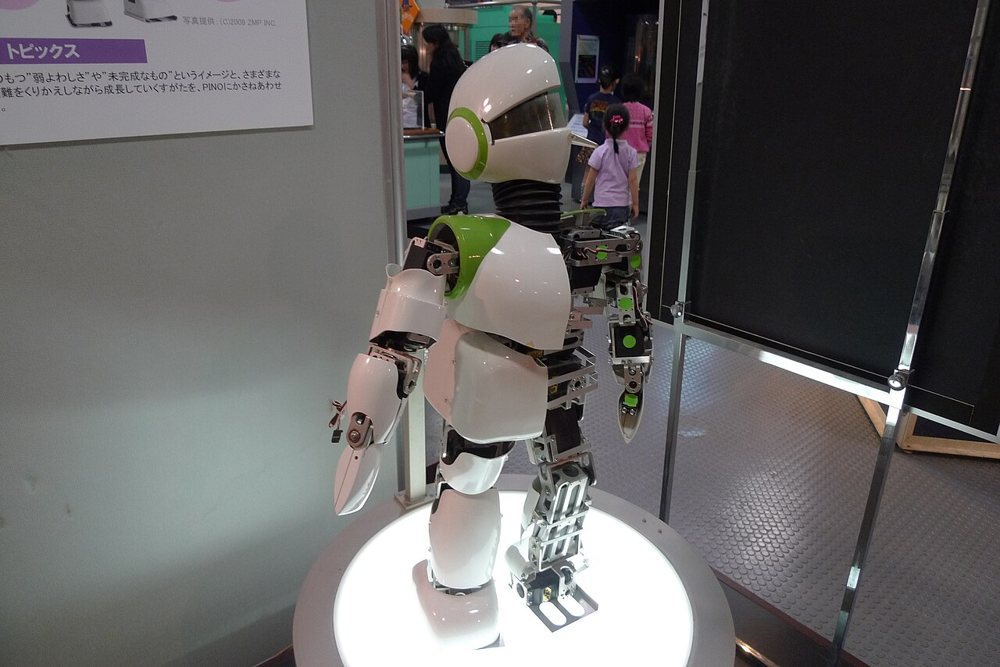 PINOJST ERATO Kitano Symbiotic Systems Project (later licensed to ZMP)Same job: entertainment · Both walk · Both past robots · Similar size PINOJST ERATO Kitano Symbiotic Systems Project (later licensed to ZMP)Same job: entertainment · Both walk · Both past robots · Similar size | 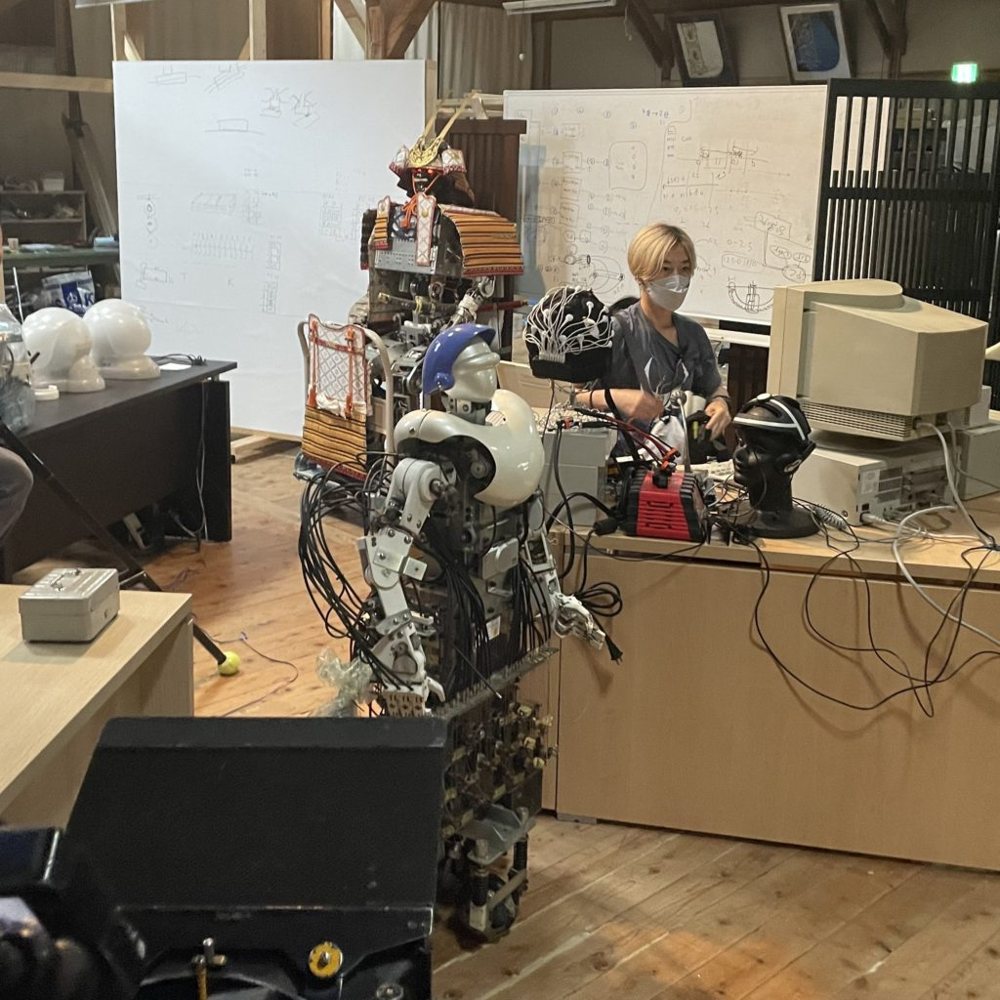 KiyomoritmsukSame job: entertainment · Both walk · Both past robots KiyomoritmsukSame job: entertainment · Both walk · Both past robots |
|---|---|---|---|
| First shown | 2002-03-19 | 2000 | 2005-12 |
| Status | Discontinued | Retired | Retired |
| Height | 58 cm | 71 cm | — |
| Weight | 6.5 kg | — | — |
| Joints | 38 | — | — |
| Speed | 1.1 km/h | — | — |
| Payload | — | — | — |
| Battery | 1 h | — | — |
| Price | — | $30,000 | — |
Sources
Figures come from press coverage. Every link below backs something on this page.
Photos and logos only identify each robot and its maker. Simbeing is not affiliated with, sponsored by or endorsing any company, and nothing here is advertising. Figures are for statistics only and are not advice of any kind. Terms of use